



Titanium Electroplating Consumables: Complete Guide to DSA Anodes, Baskets, Racks & Heating Coils
Introduction: Why Titanium Dominates Electroplating
Titanium and titanium alloys have become the standard substrate material for electroplating consumables worldwide. The combination of excellent corrosion resistance across a wide pH range, high strength-to-weight ratio, good electrical conductivity when properly prepared, and the fact that titanium does not contaminate plating baths makes commercially pure titanium (CP-Ti, Grades 1–2) the material of choice for anodes, anode baskets, racks, fixtures, and thermal management components in modern electroplating lines.
In acidic plating baths — such as hard chrome (chromic acid, CrO₃), acid copper (sulfuric acid), nickel sulfamate, and precious metal electrolytes — stainless steel and copper consumables corrode rapidly, introducing iron, nickel, and copper ions that degrade deposit quality and shorten bath life. Titanium forms a self-passivating TiO₂ oxide layer that resists attack by most plating chemistries, ensuring long service life and bath purity.
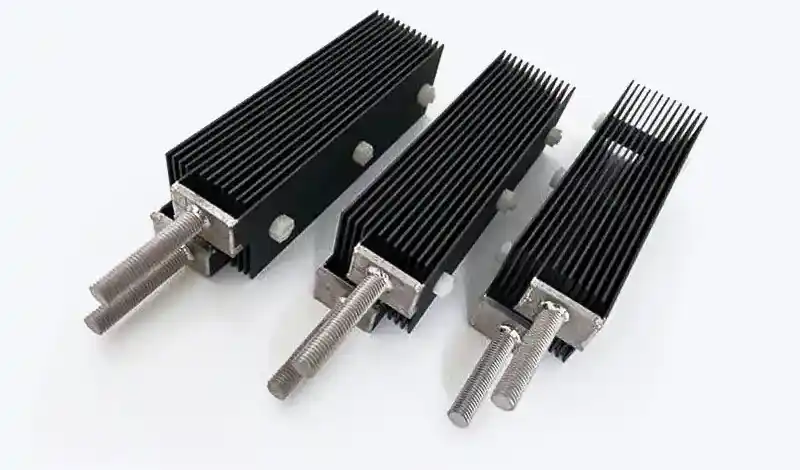
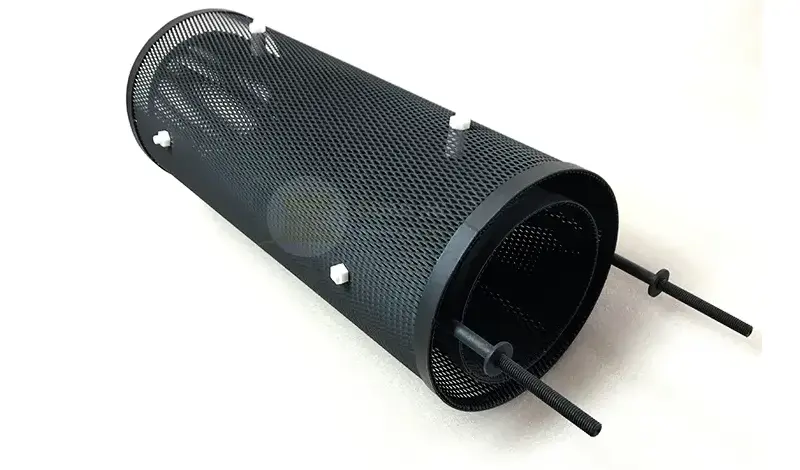
Product Categories Overview
Titanium electroplating consumables fall into five major categories by function. Each serves a distinct electrochemical or mechanical purpose in the plating process.
| ategory | Primary Function | Coating / Treatment | Typical Service Life |
|---|---|---|---|
| DSA / MMO Coated Anodes | Insoluble anode for oxygen/chlorine evolution | Ir-Ta, Ru-Ir, or Pt coating | 2–5 years |
| Titanium Anode Baskets | Hold soluble anode metal (Ni, Cu, Sn) | None (bare CP-Ti) | 5 years |
| Plating Racks & Fixtures | Hold and electrically contact workpieces | Partial PVC / PTFE insulation | 2–5 years |
| Heating & Cooling Components | Bath temperature control (heat exchange) | None (bare CP-Ti) | 5–15 years |
| Base Materials & Semi-Finished | Raw material for fabricating above items | As-supplied (pickled / polished) | N/A |
Coated Titanium Insoluble Anodes (DSA / MMO Anodes)
Dimensionally Stable Anodes (DSA), also known as Mixed Metal Oxide (MMO) anodes, consist of a titanium substrate (typically expanded mesh, plate, rod, or tube) coated with a thin layer of catalytically active precious metal oxides. The titanium base provides structural integrity and corrosion resistance, while the oxide coating provides the electrochemically active surface for oxygen or chlorine evolution reactions.
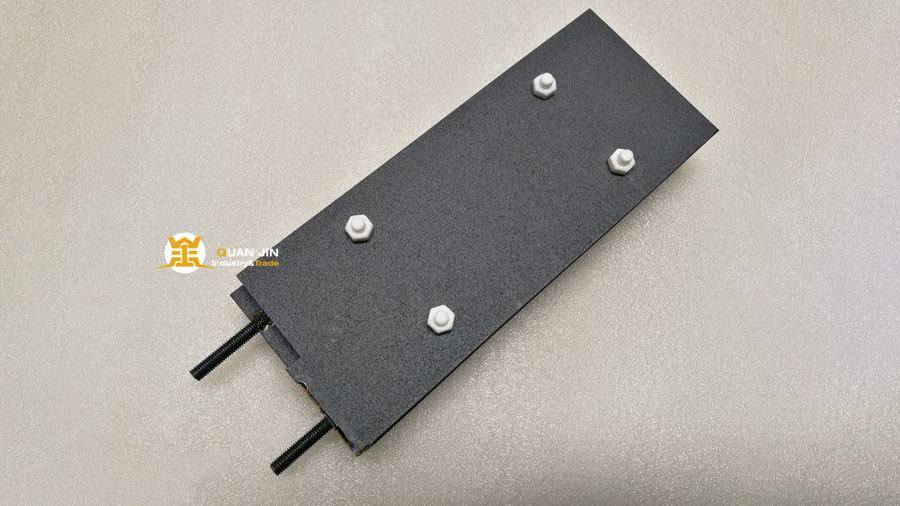
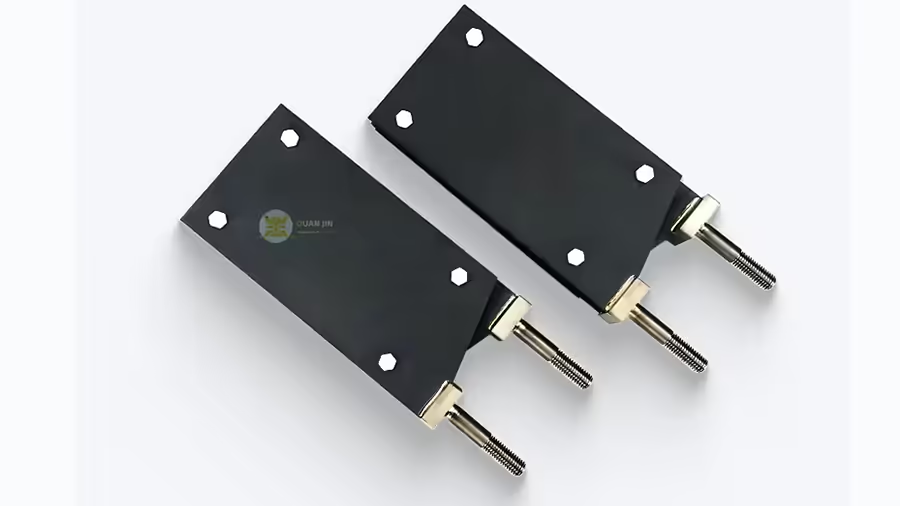
Iridium-Tantalum (Ir-Ta) Coated Anodes — Oxygen Evolution
Ir-Ta coated anodes are the industry standard for oxygen-evolving acidic environments. The coating, typically composed of 70% IrO₂ and 30% Ta₂O₅ by mole ratio, exhibits exceptional stability in sulfuric acid, chromic acid, and sulfamate electrolytes. Key applications include:
- Hard chrome plating (chromic acid baths, CrO₃ 200–400 g/L)
- Decorative chrome plating
- Acid copper plating (PCB and decorative)
- Nickel plating (Watts and sulfamate baths)
- Gold and precious metal plating
- Anodizing of aluminum and titanium
- Electrowinning and electrorefining
Typical coating loading ranges from 5 to 50 g/m² of precious metal, with higher loadings (20–50 g/m²) specified for high current density or long-life requirements. The expected coating life is 3,000–10,000 Ah/m² depending on operating conditions.
Ruthenium-Iridium (Ru-Ir) Coated Anodes — Chlorine Evolution
Ru-Ir coated anodes are optimized for chlorine evolution in chloride-containing electrolytes. The coating, typically a mixture of RuO₂, IrO₂, and TiO₂, provides lower chlorine evolution overpotential and superior stability in hydrochloric acid and chloride salt solutions. Applications include:
- Chloride-based zinc plating
- Chloride copper plating
- Electrolytic chlorine generation (hypochlorite production)
- Seawater electrolysis and cathodic protection
- Chloride-based electrowinning
Platinum-Plated Titanium Anodes (Pt-Ti)
Platinum-plated titanium anodes feature a thin layer of electrodeposited platinum (0.5–5 μm) on a titanium substrate. They offer the highest purity among insoluble anodes and are preferred for:
- High-purity gold plating (electronic and jewelry)
- Rhodium and palladium plating
- Platinum group metal (PGM) plating
- Research and laboratory plating cells
Common DSA Anode Geometries
| Geometry | Description | Typical Use |
|---|---|---|
| Expanded Mesh Anode | Diamond-pattern expanded titanium sheet, coated both sides | Most common; uniform current distribution, high surface area |
| Perforated Plate Anode | Solid titanium plate with round or slotted holes | High current density, rigid mounting requirements |
| Rod / Wire Anode | Solid or hollow titanium rod, coated circumferentially | Through-hole plating, tubular parts, internal plating |
| Tube Anode | Seamless titanium tube, coated externally and/or internally | Conformal anode for complex geometries, ID plating |
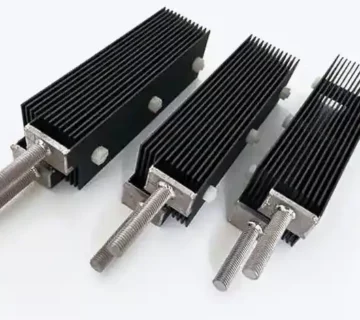
| Louver / Blade Anode | Multiple parallel titanium blades on a common bus bar | High-aspect-ratio tanks, uniform throw distribution |
Titanium Anode Baskets
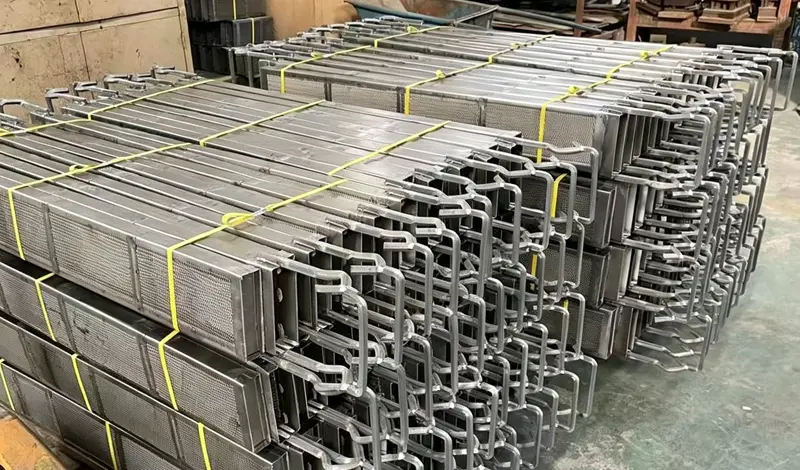
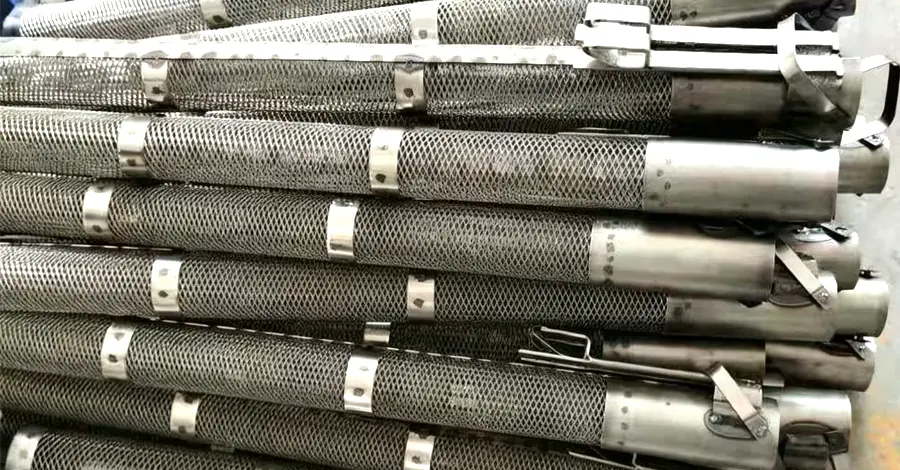
Titanium anode baskets are uncoated pure titanium mesh containers designed to hold soluble anode materials — nickel balls, nickel chunks, copper balls, tin pellets, cobalt granules, or zinc shots — that dissolve during electrolysis to replenish metal ions in the plating bath. The titanium basket itself serves as the current-carrying structural frame and does not dissolve (it passivates), while the contained metal pieces are the actual soluble anode.
Construction Features
- Mesh body: Woven titanium wire mesh (typically 2–5 mm aperture) or expanded titanium mesh, providing electrolyte circulation while retaining anode material
- Solid frame: Titanium plate or angle stock frame for structural rigidity and current distribution
- Conducting hook / lug: Solid titanium rod or bar that hooks over the tank bus bar, often with a copper or brass insert for improved contact
- Hinged or removable lid: For easy loading of anode material
- Anode bag: Polypropylene (PP) or polypropylene felt sleeve that fits over the basket to contain sludge and fine particles, preventing bath contamination
Standard Basket Types
| Basket Type | Mesh Style | Typical Dimensions (W × H × D) | Application |
|---|---|---|---|
| Standard Rectangular | Woven wire mesh | 100–200 × 300–600 × 30–80 mm | General rack plating (Ni, Cu, Sn) |
| Deep Basket | Woven wire mesh | 100–150 × 600–1200 × 40–80 mm | Deep tank plating, long parts |
| Round / Cylindrical | Woven or expanded mesh | Ø 80–200 × 300–800 mm | Barrel plating, small parts |
| Hook / J-Hook Basket | Expanded mesh | Custom | Manual plating lines, portable |
| Double Compartment | Woven mesh with divider | Custom | Mixed anode materials, alloy plating |
Titanium Plating Racks & Fixtures
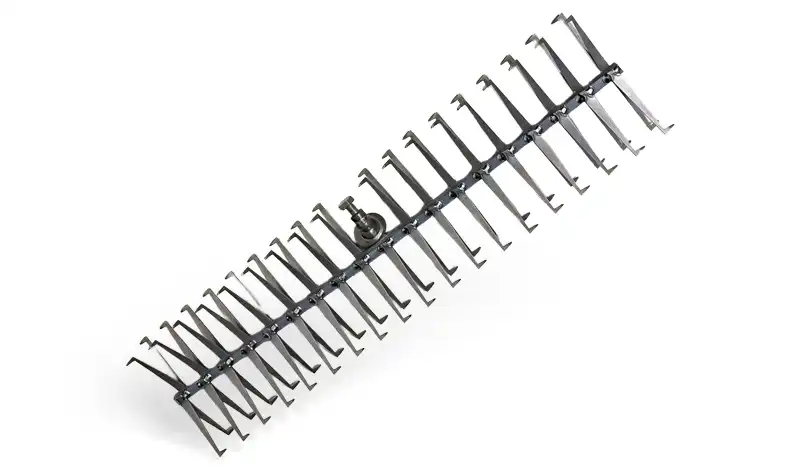
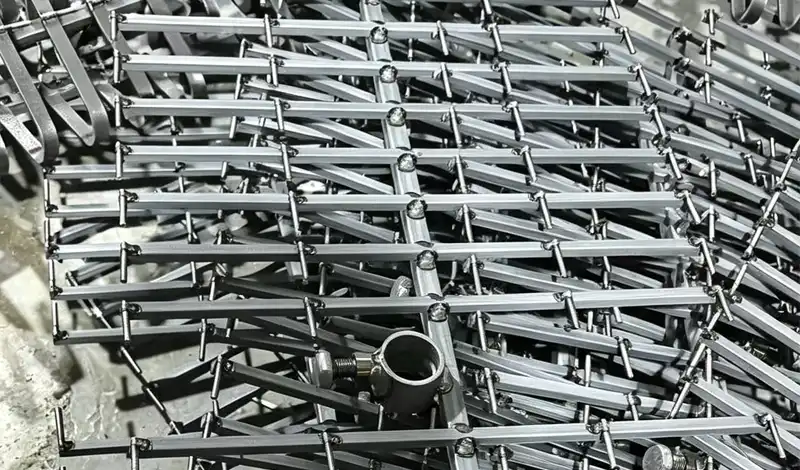
Titanium plating racks (also called plating jigs or plating fixtures) are custom-fabricated assemblies that hold workpieces during the plating process and provide electrical contact to carry cathodic current. Titanium racks are preferred over steel or copper racks in aggressive plating environments because they resist corrosion, do not contaminate baths, and can be stripped and reused many times.
Rack Construction Components
- Main rod / spine: Solid titanium rod (Ø 6–20 mm) or titanium bar that forms the backbone of the rack and carries the main current
- Cross bars / branches: Titanium rods welded perpendicular to the main spine, distributing current to individual contact points
- Contact tips / hooks: Titanium wire hooks, spring clips, or custom-shaped contacts that physically hold and electrically connect the workpiece
- Insulation coating: PVC, PTFE (Teflon), or polyethylene coating applied to all non-contact surfaces to prevent metal deposition on the rack itself and to direct current to the workpiece
- Top hook / bus bar contact: Titanium or copper-titanium bimetallic hook that rests on the tank cathode bus bar
Common Rack Types
| Rack Type | Design Feature | Suitable Workpieces |
|---|---|---|
| Single-Point Hook Rack | Individual wire hooks on cross bars | Parts with holes, loops, or hangable features |
| Spring Clip Rack | Spring-loaded titanium clips | Flat parts, stamped parts, sheet metal |
| Pin / Peg Rack | Titanium pins that insert into part holes | Threaded parts, bushings, rings, connectors |
| Custom Formed Rack | 3D-formed titanium wire matching part geometry | Complex castings, forgings, irregular shapes |
| Rotary / Barrel Rack | Cylindrical titanium cage for tumble plating | Small parts, fasteners, electronic components |
Titanium vs. Copper Racks
While copper racks offer higher electrical conductivity (~59.6 × 10⁶ S/m vs. titanium’s ~2.38 × 10⁶ S/m), titanium racks provide decisive advantages in many plating scenarios:
- Corrosion resistance: Titanium racks survive acid pickling, activation, and stripping cycles that would dissolve copper racks
- Bath purity: No copper ion contamination in non-copper plating baths
- Reusability: Titanium racks can be stripped and recoated with insulation 5–20 times, vs. 2–5 times for copper
- Weight: Titanium is ~45% lighter than copper, reducing operator fatigue and hoist load
For very high-current applications (> 500 A per rack), a copper-core titanium-clad main rod may be specified to combine copper’s conductivity with titanium’s corrosion resistance.
Titanium Heating & Cooling Components
Maintaining precise bath temperature (±1–2°C) is critical for consistent plating quality, deposit brightness, and bath stability. Titanium heating tubes and cooling coils are the standard heat exchange components for aggressive plating baths where stainless steel, copper, or PTFE exchangers fail due to corrosion, contamination, or low heat transfer efficiency.
Product Types
- Titanium heating tubes (electric immersion heaters): Titanium-sheathed electric immersion heaters with internal resistance heating elements. Available in 1–50 kW ratings, 110–480 V. Used for direct bath heating in chrome, nickel, copper, and acid baths.
- Titanium steam heating coils: Coiled or serpentine titanium tubes through which saturated steam is circulated. Higher heat transfer rate than electric; common in large production tanks.
- Titanium water cooling coils: Similar coil geometry, circulated with chilled water or glycol solution for bath cooling in exothermic processes (e.g., electropolishing, high-current plating).
- Titanium shell-and-tube heat exchangers: For indirect heating/cooling where the heat transfer medium must not contact the plating solution directly.
- Titanium overflow weirs and launders: Titanium troughs and channels for solution transfer, filtration loops, and cascade systems.
Material Specifications for Heating Applications
| Parameter | Specification |
|---|---|
| Titanium Grade | TA2 (Grade 2) standard; TA1 (Grade 1) for maximum formability |
| Tube Wall Thickness | 1.0–2.0 mm (heating coils); 1.5–3.0 mm (pressure vessels) |
| Tube Diameter (OD) | Ø 8–50 mm (coils); Ø 25–100 mm (headers) |
| Maximum Operating Temperature | ~250°C (steam service); ~120°C (electric immersion) |
| Maximum Operating Pressure | ~1.0 MPa (coils); ASME BPVC compliant designs available |
| Surface Finish | Pickled (standard); polished (for precious metal / high-purity baths) |
Titanium Base Materials & Semi-Finished Goods
All fabricated titanium consumables start as semi-finished base materials. Understanding these forms helps when specifying custom fabrications and evaluating supplier capabilities.
- Titanium expanded mesh: Produced by slitting and stretching titanium sheet (0.5–3.0 mm thick) into a diamond-pattern mesh. The most common substrate for DSA anodes and anode baskets. Standard diamond sizes: 3×6 mm, 5×10 mm, 10×20 mm.
- Titanium woven wire mesh: Woven from titanium wire (Ø 0.2–2.0 mm) in plain or twill weave. Used for fine-mesh anode baskets, filter screens, and current distribution screens. Standard mesh counts: 4–40 mesh.
- Titanium plate / sheet: 0.3–50 mm thick, used for perforated anodes, basket frames, tank liners, and structural components.
- Titanium rod / bar: Ø 3–100 mm, used for rack spines, anode rods, conducting hooks, and machined components.
- Titanium tube / pipe: Seamless or welded, Ø 6–150 mm OD, used for tube anodes, heating coils, and cooling manifolds.
- Titanium wire: Ø 0.5–6.0 mm, used for rack contact hooks, wire mesh weaving, and tying applications.
Manufacturing Process Flow
The manufacturing of titanium electroplating consumables involves a combination of metal fabrication and, for DSA anodes, specialized coating application. Below is the detailed process flow for each major product type.
DSA / MMO Coated Anode Manufacturing
The production of coated titanium anodes is a precision multi-step process where coating quality directly determines anode performance and lifespan.
- Substrate Fabrication: Cut titanium expanded mesh, plate, rod, or tube to specified dimensions. Weld conducting rods, lugs, or bus bar connectors using tungsten inert gas (TIG) welding with titanium filler wire (ERTi-1 or ERTi-2). All welding must be performed under inert argon shielding to prevent oxygen/nitrogen contamination (embrittlement).
- Surface Preparation — Degreasing: Ultrasonic or immersion cleaning in alkaline degreaser (e.g., sodium hydroxide, sodium carbonate) at 60–80°C for 10–30 minutes to remove rolling oils, machining lubricants, and organic contaminants. Rinse with deionized (DI) water.
- Surface Preparation — Acid Pickling (Etching): Immerse in a mixed acid solution of hydrofluoric acid (HF) + nitric acid (HNO₃) (typical ratio: 2–5% HF + 20–40% HNO₃, balance water) at 25–50°C for 1–10 minutes. This removes the native TiO₂ oxide layer and creates a micro-rough surface profile (Ra 1–5 μm) that promotes coating adhesion. The etched surface should have a uniform matte gray appearance. Rinse immediately with DI water and dry.
- Coating Solution Preparation: Dissolve precious metal precursors — chloroiridic acid (H₂IrCl₆), tantalum chloride (TaCl₅) or tantalum ethoxide, ruthenium chloride (RuCl₃), tetrabutyl titanate — in a solvent mixture (n-butanol, isopropanol, or hydrochloric acid-ethanol). The solution concentration and metal ratio are precisely controlled to achieve the target coating composition (e.g., 70 mol% IrO₂ / 30 mol% Ta₂O₅).
- Coating Application — Brushing / Spraying: Apply the coating solution to the prepared titanium surface using hand brushing (for small/custom parts), air spraying (for large flat areas), or dip coating (for rods/tubes). Each application deposits a thin wet film. Excess solution is removed to ensure uniform coverage.
- Drying: Dry the coated part at 80–120°C for 5–15 minutes in a forced-air oven to evaporate solvent without blistering.
- Thermal Decomposition (Sintering): Heat in a muffle furnace at 450–550°C for 5–15 minutes. At this temperature, the metal chloride/alkoxide precursors decompose and oxidize to form the mixed metal oxide coating (IrO₂, Ta₂O₅, RuO₂, TiO₂) bonded to the titanium substrate. The furnace atmosphere must be clean air (no organic vapors, no reducing gases).
- Repeat Coating Cycles: Steps 5–7 are repeated 10–30 times to build up the target coating loading (typically 8–25 g/m² of precious metal). Each cycle adds approximately 0.5–1.5 g/m². Intermediate visual inspection ensures uniform coverage.
- Final Sintering: After the final coating layer, perform an extended sintering at 480–520°C for 30–60 minutes to fully crystallize the oxide coating and ensure complete decomposition of residual precursors.
- Quality Inspection & Testing:
- Visual inspection: Uniform dark gray/black coating, no bare spots, no flaking, no cracks beyond acceptable micro-crack network
- Coating loading verification: X-ray fluorescence (XRF) or gravimetric analysis on witness coupons
- Electrochemical testing: Accelerated life test (ALT) in simulated bath at elevated current density (e.g., 2 A/cm² in 0.5 M H₂SO₄) to estimate service life; potential measurement to verify coating activity
- Adhesion test: Tape test or bend test to verify coating-substrate bond
- Packaging: Wrap in acid-free paper, label with coating type, loading, dimensions, and serial number. Store in dry environment away from reducing agents and organic solvents.
Titanium Anode Basket Manufacturing
- Material cutting: Cut titanium woven mesh or expanded mesh to size using shearing, waterjet, or laser cutting. Cut titanium plate/angle for frame components.
- Forming: Bend mesh into rectangular, cylindrical, or custom shapes using press brakes or rolling machines. Bend frame stock to match basket perimeter.
- Welding: TIG weld all seams and frame joints. Mesh-to-frame attachment uses spot welding or continuous seam welding. Conducting hook/lug is welded to the top frame with full penetration.
- Grinding & deburring: Remove weld spatter, sharp edges, and burrs using abrasive belts, files, or vibratory finishing. Ensure no sharp points that could puncture anode bags.
- Pickling & passivation: Immerse in HF-HNO₃ mixed acid to remove weld discoloration (heat-affected zone oxide) and restore uniform corrosion resistance. Rinse with DI water. This step is critical — weld areas without pickling are susceptible to localized corrosion.
- Inspection: Verify dimensions, weld integrity (pressure or dye penetrant test for critical baskets), mesh aperture uniformity, and conducting hook alignment.
- Anode bag fitting (optional): Sew or fit a PP/polypropylene felt anode bag to the basket dimensions.
Titanium Plating Rack Manufacturing
- Design & prototyping: Based on workpiece drawings, design rack layout including contact point positions, current density distribution, and part spacing. 3D CAD modeling recommended. Prototype for first-article approval.
- Material preparation: Cut titanium rod (main spine, cross bars) and titanium wire (contact hooks) to length. Straighten wire if needed.
- Forming: Bend contact hooks, spring clips, and custom contacts to match workpiece geometry using CNC wire bending or manual fixturing.
- Welding: TIG weld cross bars to main spine, and contact points to cross bars. Weld quality is critical — poor welds cause high resistance, localized heating, and eventual failure. Welds must be smooth (no crevices where plating can trap).
- Grinding & polishing: Smooth all welds and surfaces. Contact tips should be polished to ensure good electrical contact with workpiece.
- Masking of contact areas: Apply high-temperature tape or silicone caps to all contact points that must remain uncoated (exposed titanium for electrical contact).
- Insulation coating application:
- PVC coating: Preheat rack to 200–250°C, dip into a fluidized PVC (polyvinyl chloride) powder bed, then post-cure at 180–200°C for 15–30 minutes. Coating thickness: 0.3–1.0 mm. Multiple dips for thicker coating.
- PTFE coating: Spray PTFE dispersion, cure at 360–380°C. Superior chemical resistance but more expensive and thinner (20–50 μm per coat).
- Unmasking & touch-up: Remove masking from contact points. Touch up any coating defects (pinholes, thin spots) with liquid PVC or PTFE repair compound.
- Spark test (holiday detection): Apply 5–15 kV DC to the rack surface (with contact points grounded) to detect pinholes or thin spots in the insulation coating. Any spark indicates a defect requiring repair.
- Final inspection: Verify contact point alignment, insulation integrity, workpiece fit, and current-carrying capacity (resistance measurement between bus bar hook and each contact point should be < 5 mΩ).
Titanium Heating Coil Manufacturing
- Tube selection & inspection: Select seamless titanium tube (Grade 2) with certified mill test report (MTR). Verify wall thickness with ultrasonic testing, check for surface defects.
- Tube bending: Cold-bend titanium tube into coil or serpentine geometry using CNC tube benders with mandrel support to prevent wall thinning and ovality. Minimum bend radius: typically 3–5 × tube OD. For tight radii, hot bending at 300–400°C may be required.
- End preparation: Cut tube ends square, bevel for welding, or thread for pipe connections. Weld on titanium flanges, threaded adapters, or compression fittings.
- Welding: TIG weld all joints under argon purge (both internal and external shielding). Use ERTi-2 filler. Welds must be full penetration with convex or flush profile (no concave crevices).
- Heat treatment (optional): Stress-relief anneal at 480–520°C for 30–60 minutes to reduce residual stresses from bending, improving resistance to stress corrosion cracking in chloride environments.
- Pickling & passivation: HF-HNO₃ pickling to remove weld discoloration and restore corrosion resistance. Final passivation in 20–30% HNO₃ at 40–50°C for 30–60 minutes.
- Pressure testing: Hydrostatic pressure test at 1.5 × maximum working pressure for 30 minutes. No leakage, no permanent deformation. For electric immersion heaters, perform hipot (dielectric withstand) test and insulation resistance test (> 100 MΩ at 500 V DC).
- Final inspection & certification: Dimensional verification, surface inspection, pressure test certificate, material traceability documentation.
Selection Guide by Plating Application
Selecting the correct titanium consumable for a specific plating process requires matching the product’s electrochemical and mechanical properties to the bath chemistry, operating conditions, and quality requirements. The following table provides a comprehensive selection matrix.
Anode Selection Matrix
| Plating Process | Bath Chemistry | Recommended Anode Type | Coating Loading | Max Current Density | Notes |
|---|---|---|---|---|---|
| Hard Chrome | CrO₃ 200–400 g/L, H₂SO₄ catalyst | Ir-Ta coated DSA (mesh or louver) | 15–25 g/m² | 30–75 A/dm² | Replaces lead anodes; higher efficiency, no lead contamination |
| Decorative Chrome | CrO₃ 150–250 g/L | Ir-Ta coated DSA mesh | 10–15 g/m² | 10–25 A/dm² | Uniform current distribution critical for brightness |
| Acid Copper (PCB) | CuSO₄·5H₂O, H₂SO₄, Cl⁻ | Ir-Ta coated DSA mesh (insoluble) OR Ti basket with Cu balls (soluble) | 10–15 g/m² (DSA) | 5–40 A/dm² | DSA preferred for high-throw PCB; soluble Cu for decorative |
| Alkaline Copper | CuCN, NaCN, NaOH (cyanide) | Steel or copper anode (titanium not standard) | N/A | 1–5 A/dm² | Titanium passivates in cyanide; use copper anodes |
| Watts Nickel | NiSO₄, NiCl₂, H₃BO₃ | Ti anode basket + Ni balls / Ni chunks | N/A (bare Ti) | 2–10 A/dm² | Use anode bags; maintain Ni:Cl ratio for uniform dissolution |
| Nickel Sulfamate | Ni(NH₂SO₃)₂, H₃BO₃ | Ti anode basket + Ni S-rounds / Ni chips | N/A (bare Ti) | 2–15 A/dm² | Low-stress deposits; use sulfur-free nickel anode material |
| Electroless Nickel | NiSO₄, NaH₂PO₂, organic complexing agents | Stainless steel or Ti basket (for replenishment only) | N/A | N/A (no current) | Titanium used for heater tubes and tank liners; not as anode |
| Gold Plating (acid) | KAu(CN)₂, citric/phosphoric acid | Pt-plated Ti anode OR Ir-Ta DSA | Pt: 1–5 μm; DSA: 8–12 g/m² | 0.5–3 A/dm² | High purity required; Pt-Ti preferred for critical electronic parts |
| Gold Plating (neutral/alkaline) | KAu(CN)₂, phosphate buffer, KOH | Stainless steel 316L OR Pt-plated Ti | Pt: 1–5 μm | 0.5–2 A/dm² | Avoid DSA in alkaline cyanide; coating may degrade |
| Silver Plating | AgCN, KCN, K₂CO₃ (cyanide) | Silver anode (titanium not recommended) | N/A | 0.5–5 A/dm² | Titanium passivates in cyanide silver baths |
| Tin Plating (acid) | SnSO₄, H₂SO₄, phenolsulfonic acid | Ti anode basket + tin pellets / tin bars | N/A (bare Ti) | 1–8 A/dm² | Use fine-mesh basket (≤2 mm) to retain small tin pellets |
| Tin-Lead Solder | Sn(BF₄)₂, Pb(BF₄)₂, HBF₄ | Ti anode basket + Sn-Pb alloy bars | N/A (bare Ti) | 1–5 A/dm² | Ensure basket material compatible with fluoroborate acid |
| Zinc Plating (acid chloride) | ZnCl₂, KCl, H₃BO₃ | Ru-Ir coated DSA OR Ti basket + Zn shots | Ru-Ir: 8–12 g/m² | 1–8 A/dm² | Chloride environment; Ru-Ir outperforms Ir-Ta |
| Zinc Plating (alkaline) | ZnO, NaOH, cyanide-free | Steel or zinc anode (titanium not standard) | N/A | 1–5 A/dm² | Titanium passivates in strong alkaline (NaOH > 100 g/L) |
| Rhodium Plating | Rh₂(SO₄)₃, H₂SO₄ | Pt-plated Ti anode (platinum or Pt-Ir) | Pt: 2–5 μm | 0.5–3 A/dm² | Extremely high purity; DSA not suitable (contamination risk) |
| Palladium Plating | Pd(NH₃)₂Cl₂, NH₄OH, EDTA | Pt-plated Ti anode OR Pd anode | Pt: 2–5 μm | 0.5–2 A/dm² | Ammoniacal alkaline; verify titanium compatibility |
| Aluminum Anodizing | H₂SO₄ 150–200 g/L (Type II); chromic acid (Type I) | Ir-Ta coated DSA (lead replacement) OR 3003 Al cathode | 10–20 g/m² | 10–30 A/dm² | DSA replaces lead cathodes in anodizing; the Al workpiece is the anode |
| Electropolishing | H₃PO₄, H₂SO₄, glycerol (various) | Ti cathode (bare) OR lead cathode | N/A (bare Ti as cathode) | 10–100 A/dm² | Titanium used as cathode (workpiece is anode); excellent corrosion resistance |
Rack Selection Considerations
| Factor | Consideration | Guideline |
|---|---|---|
| Current per rack | Total current = parts × area per part × current density | Main spine: 1 mm² per 5–8 A (Ti); use Cu-core Ti for > 300 A |
| Part spacing | Prevent part-to-part arcing and shadowing | Minimum 25–50 mm between parts; 50–100 mm for high-current |
| Contact method | Ensure reliable electrical contact without damaging part | Spring clips for flat parts; hooks for holes; pins for threaded parts |
| Insulation material | Resistance to bath chemistry and temperature | PVC: < 80°C, general acid; PTFE: > 80°C, strong acid/solvent |
| Rack stripping | Accumulated plating on contact points must be removed periodically | Chemical stripping (nitric acid for Ni/Cu; cyanide stripper for Au/Ag) |
| Weight capacity | Rack must support workpiece weight without bending | Calculate deflection; use larger spine or cross-bracing for heavy parts |
Heating/Cooling Sizing Guide
To size a titanium heating coil or electric heater, use the following heat balance equation:
Heat Required (kW) = [Tank Volume (L) × Specific Heat (J/L·°C) × Temperature Rise (°C)] / [Heat-up Time (s) × 1000] + Heat Losses (kW)
Typical specific heat of plating solutions: 3,500–4,200 J/L·°C (≈ water). Heat losses: 0.5–2 kW per m² of tank surface area (uninsulated), reduce by 50–70% with insulation.
- Heat-up time target: 1–4 hours from ambient to operating temperature
- Steam coil sizing: 0.1–0.3 m² of coil surface area per kW of heat duty (condensing steam at 100–150°C)
- Electric immersion: 1–5 W/cm² of sheath surface area (max 8 W/cm² for titanium in well-agitated baths)
- Cooling coil: Size for maximum exothermic heat load; typically 0.2–0.5 m² per kW with chilled water at 5–15°C
Usage, Installation & Maintenance Best Practices
DSA Anode Installation & Operation
- Pre-installation inspection: Verify coating type, dimensions, and coating loading against purchase specification. Inspect for shipping damage (scratches, flaking, bent mesh). Do not install damaged anodes — contact supplier for replacement.
- Handling: Handle coated surfaces with clean gloves. Never touch the active coating surface with bare hands — skin oils and salts can cause localized coating failure. Do not slide coated surfaces against tank walls or other metal objects.
- Mounting: Secure anode to tank bus bar using the titanium conducting lug or copper-titanium bimetallic connector. Ensure clean, tight electrical contact — clean bus bar and lug surfaces with abrasive paper before mounting. Loose connections cause resistive heating, voltage drop, and accelerated coating degradation.
- Anode-cathode spacing: Maintain uniform anode-cathode (A-C) distance across the tank. Typical A-C spacing: 100–300 mm for rack plating, 50–150 mm for high-speed plating. Non-uniform spacing causes uneven current distribution and coating thickness variation on workpieces.
- Polarity verification: Before energizing, verify that the DSA anode is connected to the positive (+) terminal of the rectifier and the workpiece/rack to the negative (−). Reverse polarity will destroy the coating in seconds to minutes.
- Current density control: Operate within the manufacturer’s recommended current density range. Exceeding the maximum rated current density accelerates coating dissolution and shortens life. Typical operating range: 0.5–5 A/dm² (general plating), up to 30–75 A/dm² for hard chrome with high-loading coating.
- Bath chemistry monitoring: Maintain bath composition within specification. Key parameters that affect DSA life:
- F⁻ concentration: < 10 ppm (fluoride attacks TiO₂ passivation layer and coating)
- Cl⁻ concentration: within bath specification (excess chloride causes pitting)
- Fe³⁺, Cu²⁺ contamination: can plate onto anode surface and deactivate coating
- pH: maintain within recommended range (acidic baths: pH 0–4)
- Shutdown procedure: When shutting down the line for extended periods (> 8 hours), remove anodes from the bath, rinse with DI water, and store dry. Do not leave DSA anodes submerged in stagnant, unheated, or contaminated solution — this can cause coating degradation and titanium substrate pitting.
Titanium Anode Basket Maintenance
- Anode material loading: Fill basket to 80–90% capacity. Do not overfill — expansion during dissolution can damage the basket or cause bridging. Use appropriate anode form: balls (Ø 10–50 mm), chunks, pellets, or S-rounds.
- Anode bag maintenance: Inspect anode bags weekly for tears, clogging, or excessive sludge buildup. Replace or clean bags every 1–3 months. Clogged bags increase resistance, reduce current efficiency, and cause uneven dissolution.
- Basket cleaning: Every 3–6 months, remove baskets from the tank, empty remaining anode material, and clean:
- Rinse with water to remove loose sludge
- Soak in 10–20% HCl or H₂SO₄ for 30–60 minutes to dissolve accumulated metal deposits
- Scrub gently with nylon brush (do not use steel wool — iron contamination)
- Rinse with DI water, dry
- Inspection: Check baskets for corrosion (pitting, thinning), mesh damage (tears, stretched openings), weld integrity, and conducting hook condition. Replace baskets showing > 20% wall thinning or perforations.
- Electrical contact: Clean basket hook and bus bar contact surfaces regularly. Oxide buildup increases resistance and causes heating. Light abrasion with Scotch-Brite or 320-grit sandpaper, then wipe clean.
Titanium Plating Rack Maintenance
- Daily inspection: Check racks for damaged insulation (cracks, chips, blisters), bent or broken contacts, and loose welds. Damaged insulation causes unwanted plating on the rack, wasting metal and causing current leakage.
- Contact point cleaning: Contact tips accumulate plating deposit over time, increasing contact resistance. Strip deposits periodically:
- Nickel/copper deposits: soak in 50% HNO₃ at 40–50°C until dissolved (10–30 min)
- Gold/silver deposits: cyanide-based stripper (follow safety protocols)
- Chrome deposits: reverse electrolysis in 10% NaOH or proprietary chrome stripper
- Insulation repair: Small defects in PVC insulation can be repaired with liquid PVC dip coating or PVC repair tape. For PTFE-coated racks, use PTFE repair compound. Large-area damage requires full recoating.
- Spark testing: Perform holiday detection (spark test) on racks every 3–6 months or after any repair. Apply 5–15 kV DC; any sparking indicates a pinhole or thin spot requiring repair.
- Rack rotation: Implement a rack rotation schedule to distribute wear. Have 2–3 sets of racks per part type, allowing one set to be stripped/cleaned/repaired while others are in production.
- Storage: Store racks in clean, dry racks or carts. Do not stack racks — contact points can be damaged and insulation can be scratched. Hang racks by the main hook when not in use.
Titanium Heating & Cooling Maintenance
- Scale removal: Titanium heating surfaces accumulate mineral scale (calcium, magnesium salts) and plating sludge over time, reducing heat transfer efficiency. Clean periodically:
- Mild scale: soak in 10–15% citric acid or sulfamic acid at 40–60°C for 1–4 hours
- Heavy scale: 10–20% HCl with inhibitor (avoid HF — attacks titanium)
- Rinse thoroughly with DI water after acid cleaning
- External inspection: Inspect heating coils/tubes for pitting, corrosion, discoloration, or physical damage. Pay special attention to weld joints and U-bends — these are common failure points.
- Internal inspection (steam/water coils): For shell-and-tube or long-run coils, inspect internal surfaces for corrosion product buildup. Use borescope inspection for inaccessible areas. Flush internal circuits with descaling solution annually.
- Electric heater maintenance:
- Check sheath integrity for cracks or pinholes (leakage current test)
- Verify thermostat calibration annually
- Inspect electrical connections for overheating (discoloration, melted insulation)
- Test ground fault / leakage current: should be < 5 mA at operating temperature
- Pressure testing: Hydrostatic test steam/water coils annually or after any repair. Test at 1.5 × working pressure for 30 minutes. Document results.
- Never dry-fire: Ensure heating elements are fully submerged before energizing. Install low-level cutoff switches as a safety interlock.
Common Problems & Troubleshooting
| Symptom | Possible Cause | Diagnostic Step | Solution |
|---|---|---|---|
| DSA anode voltage increases over time | Coating deactivation / depletion; Fe/Cu contamination plating onto anode; fluoride attack | Measure anode potential vs. reference electrode; inspect surface for deposits; test bath F⁻ | Clean anode (acid soak); remove bath contamination; replace anode if coating depleted; control F⁻ < 10 ppm |
| DSA anode coating flaking / peeling | Poor surface preparation (inadequate etching); thermal shock; mechanical damage; reverse polarity | Inspect peeled area substrate — shiny Ti indicates poor adhesion; gray oxide indicates overheating | Replace anode; verify supplier surface prep; avoid thermal shock (cold rinse on hot anode); verify polarity |
| Titanium basket corroding / pitting | Basket acting as anode (insufficient soluble anode material); fluoride in bath; weld area unpickled; galvanic coupling | Inspect pitting location — at welds = unpickled HAZ; general = fluoride; at solution line = crevice | Maintain adequate soluble anode fill; control F⁻; ensure all welds are pickled; avoid contact with dissimilar metals |
| Rack contact points overheating / burning | Plating buildup on contact; loose/worn contact spring; inadequate contact area; high current | Measure voltage drop across contact (> 50 mV = poor); inspect contact surface for pitting/arcing | Strip and clean contacts; replace worn spring clips; increase contact area; verify rack current rating |
| Plating deposits on rack (non-contact areas) | Insulation pinholes / cracks; insulation too thin; electrostatic discharge through coating | Spark test rack; inspect under magnification for pinholes; check coating thickness | Repair insulation defects; recoat rack with additional PVC/PTFE layers; ensure spark test passes before use |
| Heating coil not reaching temperature | Mineral scale buildup; insufficient steam pressure/flow; air trapped in coil; thermostat fault | Measure inlet/outlet temperature differential; inspect coil surface for scale; verify steam supply pressure | Descale coil; bleed air from high points; verify steam supply; calibrate/replace thermostat |
| Heating element leaking / tripping GFCI | Sheath pinhole / crack; moisture in terminal enclosure; damaged wiring; element end-of-life | Megger test insulation resistance (< 1 MΩ = failure); pressure test sheath; inspect terminal block | Replace heating element; dry and seal terminal enclosure; repair wiring; install leakage current monitor |
| Bath metal concentration dropping | Anode basket not properly filled; anode passivation; poor anode-cathode area ratio; anode bag clogged | Check anode fill level; inspect anode surface for passivation (dark/black film); measure anode current efficiency | Refill anode basket; clean/activate anode surface; increase anode area; clean/replace anode bags |
| Pitting / roughness in deposit | Anode bag torn (sludge entering bath); particulate contamination; DSA coating particles; filter failure | Inspect anode bags for tears; analyze bath particulate; check filter cartridge condition; Hull cell test | Replace torn anode bags; filter bath (1–5 μm cartridge + carbon); inspect DSA for coating loss; improve filtration |
Frequently Asked Questions
Q: What is the difference between a DSA anode and a titanium anode basket?
A: A DSA (Dimensionally Stable Anode) is a coated titanium insoluble anode with catalytic oxide coatings (iridium-tantalum or ruthenium-iridium) that does not dissolve during electrolysis. It is used in processes where no soluble anode metal is needed, such as chrome plating, acid copper (insoluble mode), gold plating, and anodizing. A titanium anode basket is an uncoated pure titanium mesh container that holds soluble anode materials (nickel balls, copper balls, tin pellets) which dissolve to replenish metal ions in the plating bath. The titanium basket itself serves only as the current-carrying frame and does not dissolve.
Q: Which titanium grade is used for electroplating consumables?
A: TA1 (Grade 1) and TA2 (Grade 2) commercially pure titanium are the standard grades. TA1 offers superior corrosion resistance and formability, making it preferred for DSA anode substrates, fine mesh baskets, and applications requiring maximum ductility. TA2 provides higher mechanical strength (yield strength ~275 MPa vs. ~170 MPa for TA1) and is used for plating racks, heating coils, structural frames, and components under mechanical load. Grades 5 (Ti-6Al-4V) and 7 (Ti-Pd) are generally not used for electroplating consumables due to cost, alloy contamination risk, and limited availability in thin sheet/mesh form.
Q: How long does a DSA titanium anode last?
A: A properly maintained DSA anode typically lasts 3 to 7 years depending on coating type, current density, bath chemistry, and operating conditions. Iridium-tantalum coated anodes in oxygen-evolving acidic baths generally last 3 to 5 years at normal current densities (1–5 A/dm²). Ruthenium-iridium coated anodes in chloride baths may last 5 to 7 years. Coating life is measured in ampere-hours per square meter (Ah/m²), with typical ratings of 3,000–10,000 Ah/m² for standard coatings and up to 20,000+ Ah/m² for high-loading premium coatings. Factors that shorten life: high current density, fluoride contamination, reverse polarity, poor bath maintenance, and mechanical damage.
Q: Can titanium anode baskets be used in chrome plating?
A: No. Chrome plating uses insoluble anodes because chromium metal does not dissolve efficiently as a soluble anode in chromic acid baths. Lead or lead-alloy anodes were traditionally used, but DSA coated titanium anodes (iridium-tantalum type) are the modern preferred choice for both hard chrome and decorative chrome plating. Titanium anode baskets are used for nickel, copper, tin, cobalt, and zinc plating where soluble anode metal is required to replenish the bath. Using a titanium basket in a chrome bath would result in the titanium basket itself becoming the anode (since no soluble metal is present), causing rapid passivation, voltage rise, and potential titanium substrate damage.
Q: How do I clean and maintain titanium plating racks?
A: Titanium plating racks should be cleaned and inspected on a regular schedule: (1) Daily — inspect for damaged insulation, bent contacts, and loose welds. (2) Weekly — wipe contact points clean, verify workpiece fit. (3) Monthly — strip accumulated plating from contact points using appropriate chemical stripper (nitric acid for Ni/Cu, cyanide stripper for Au/Ag), then rinse. (4) Every 3–6 months — perform spark test (holiday detection) at 5–15 kV DC to detect insulation pinholes; repair any defects with liquid PVC or PTFE repair compound. (5) Annually — full strip, inspect, and recoat if insulation is worn or damaged. Avoid using hydrochloric acid or abrasive methods (steel wool, sandblasting) that can damage the titanium surface or PVC/PTFE insulation. Always wear appropriate PPE when handling chemical strippers.
Q: Can DSA anodes be recoated after they fail?
A: Yes, in many cases DSA anodes can be recoated, providing significant cost savings compared to purchasing new anodes. The recoating process involves: (1) complete removal of the old coating by chemical stripping (acid dissolution) or mechanical blasting; (2) re-etching the titanium substrate in HF-HNO₃ to create a fresh active surface; (3) reapplication of the coating using the standard brush-dry-sinter process. However, recoating is only viable if the titanium substrate is in good condition — anodes with severe pitting, thinning (> 30% wall loss), warping, or weld damage should be replaced. The recoated anode typically achieves 80–95% of the life of a new anode at 40–60% of the cost. Always have recoating performed by a qualified supplier with electrochemical testing capability.
Q: What is the maximum operating temperature for titanium in plating baths?
A: Commercially pure titanium (Grades 1–2) can operate continuously up to approximately 120–150°C in most acidic plating baths without significant corrosion. However, the practical upper limit depends on bath chemistry: (1) Sulfuric acid baths: up to 80–90°C at concentrations < 10%; above this, corrosion rate increases. (2) Chromic acid baths: up to 60–65°C (standard hard chrome operating temperature). (3) Nickel sulfamate baths: up to 60–70°C. (4) Phosphoric acid baths: up to 80–100°C. (5) Alkaline baths (NaOH): titanium is generally not recommended above 60°C at NaOH concentrations > 50 g/L due to accelerated corrosion (hydrogen embrittlement risk). For titanium heating coils carrying steam, the tube wall temperature may reach 120–150°C locally, which is acceptable as long as the external bath temperature remains within the safe range. Always consult the titanium corrosion resistance chart for specific bath chemistry and temperature combinations.
Titanium electroplating consumables — encompassing DSA/MMO coated anodes, titanium anode baskets, plating racks and fixtures, heating and cooling components, and base materials — represent a critical investment in plating quality, bath longevity, and operational efficiency. Understanding the distinct functions, manufacturing processes, selection criteria, and maintenance requirements of each category enables plating engineers and procurement managers to make informed decisions that optimize total cost of ownership.
The key takeaways from this guide are:
- Match anode type to bath chemistry: Ir-Ta DSA for oxygen-evolving acidic baths (chrome, acid copper, nickel), Ru-Ir DSA for chloride environments, Pt-Ti for high-purity precious metal plating, and titanium baskets for soluble-anode processes (Ni, Cu, Sn, Zn).
- Invest in quality manufacturing: Proper surface preparation (degreasing + acid etching), controlled coating application, and rigorous quality testing directly determine DSA anode lifespan. For baskets and racks, full-penetration TIG welding with post-weld pickling is essential for corrosion resistance.
- Maintain rigorously: Regular cleaning, inspection, and preventive maintenance — including anode bag replacement, rack spark testing, heating coil descaling, and DSA potential monitoring — can extend consumable life by 30–50% and prevent unplanned downtime.
- Control bath chemistry: Fluoride contamination (> 10 ppm), excess chloride, heavy metal ion contamination, and out-of-spec pH are the primary causes of premature titanium consumable failure. Continuous filtration and regular bath analysis are essential.
- Consider recoating and refurbishment: DSA anodes with intact substrates can be recoated at 40–60% of new cost. Titanium racks can be stripped and recoated multiple times. These circular economy practices reduce both cost and environmental impact.
Need help matching an anode to your bath chemistry?
Send us your tank size, electrolyte and current density for a free selection proposal.