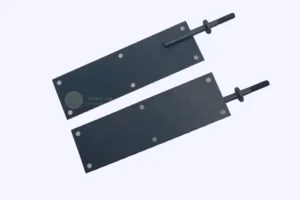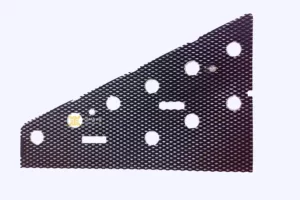

Iridium Tantalum Coated Titanium Anodes
As a type of dimensionally stable anode (DSA), our iridium tantalum coated titanium anodes are insoluble titanium-based anodes with an iridium tantalum oxide coating. Owing to their light weight, good temperature resistance and high mechanical strength, the iridium tantalum coated titanium anodes are highly regarded as the most economic and practical choice for use in an inorganic electrolyte such as sulfuric and nitric acids.
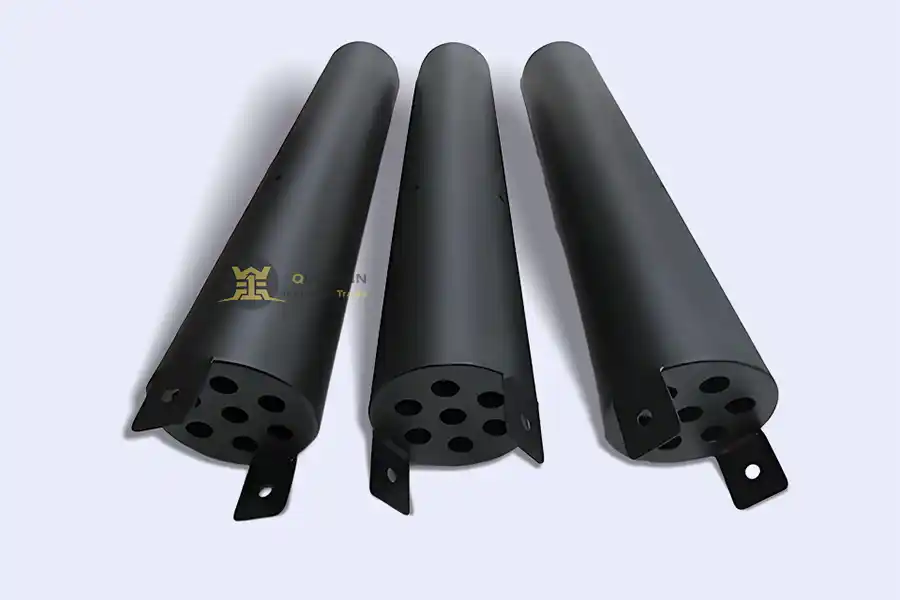
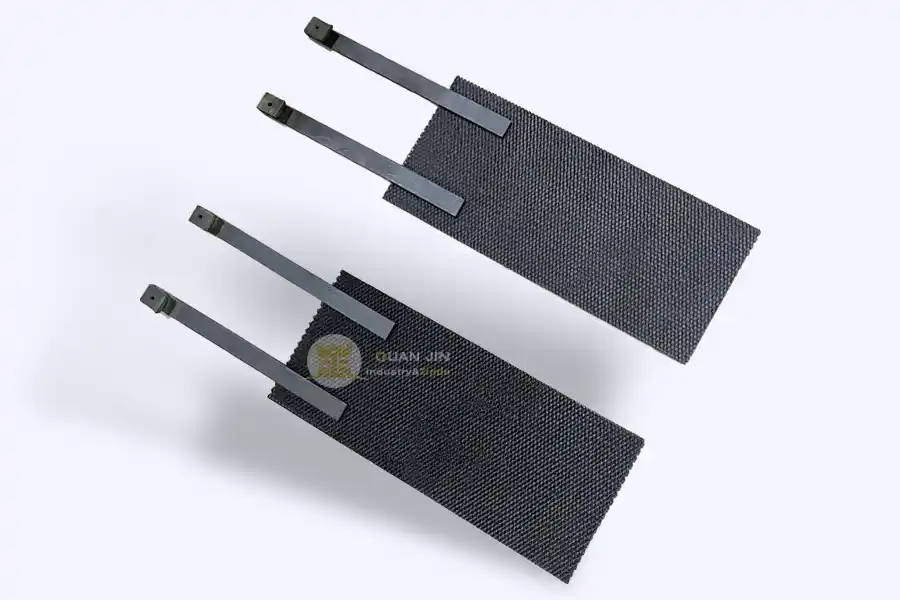
Iridium tantalum coated titanium anodes can be fabricated in forms such as perforated plate, sheet, mesh, rod, wire or basket.
Our offers a wide range of long-lasting iridium tantalum coated titanium anodes with excellent durability, stable operational performance, remarkable energy efficiency and minimum plant downtime.
MMore than Twenty years of MMO-coated titanium anode manufacturing experience.

Ir Ta titanium anodes are widely used in copper foil production, printed circuit board manufacturing, etching solution regeneration, electrolytic organic synthesis, persulfate electrolysis, hospital sewage treatment, wastewater treatment, hydrometallurgy, industrial electroplating (Ag, Au, Rh, Cu, Zn, Ni, Sn, Cr) and many other electrochemical processes in which oxygen evolution is known to be the key anodic reaction.
Coating guide · Oxygen evolution
For cells where oxygen forms at the anode, this coating is the one that lasts. Here is what it is made of, the conditions it survives, and the numbers worth settling before you ask anyone for a price.
Schematic, not to scale. The cracked “mud” pattern in the oxide layer is normal: it is how a fired coating relieves shrinkage stress, and it is also where failure usually starts.
70:30
Typical Ir:Ta molar ratio in the oxide layer
5–20g/m²
Noble-metal loading, depending on duty
≤60°C
Usual aqueous service ceiling
1 to 5yr
Field life in acid oxygen duty, when spec’d correctly
An iridium tantalum coated titanium anode is a Grade 1 or Grade 2 titanium substrate carrying a mixed iridium–tantalum oxide layer, usually 5–20 g/m² of noble metal fired onto an etched surface. It exists for one reason: in acid electrolytes where oxygen evolves at the anode, ruthenium-based coatings dissolve and lead alloys sludge, and this coating keeps working. Everything else about it follows from that.
Short version
- The active layer is IrO₂ with Ta₂O₅, most often at a 70:30 molar ratio. Iridium does the catalysis; tantalum oxide holds the structure together.
- Use it for oxygen evolution in sulfuric, nitric and other acid media, and for copper foil, PCB plating, persulfate and organic electrosynthesis.
- Do not use it for brine or seawater chlorine duty. A ruthenium iridium coating is cheaper and far more active there.
- Four variables decide its life: current density, temperature, fluoride, and polarity. Get any one wrong and the datasheet number means nothing.
What the coating is, layer by layer
Strip away the product photography and an Ir-Ta anode is four things stacked in a vertical line: titanium, an etched surface, an oxide layer, and whatever electrolyte you put it in. Each interface decides something different about how long the part lasts.
The substrate
The base is commercially pure titanium, Grade 1 or Grade 2, rolled toASTM B265. Grade 1 is softer and forms more easily into expanded mesh and perforated sheet. Grade 2 carries a bit more strength for large plates, deep draws and busbar welds. Thickness runs from about 0.5 mm for mesh to 3 mm for a structural plate. Titanium is not a great conductor, but it does not have to be: current crosses a wall a millimeter or two thick, then spreads sideways through the metal.
The etch
Before coating, the surface is degreased and then etched in hot oxalic or hydrochloric acid. The etch removes the air-formed oxide that would otherwise sit between metal and coating as an insulator, and it leaves a gray, microscopically pitted surface. That roughness is mechanical grip. A coating applied over a poorly etched surface can look perfect on the day it ships and blister off within a season, because the bond was never chemical to begin with.
The active oxide
The coating itself is iridium oxide plus tantalum oxide, applied as chloride precursors and fired. A 70:30 Ir:Ta molar ratio is the standard for oxygen duty, and it is the composition most of the literature settles on for stability and activity at once. Hotter or dirtier electrolytes sometimes push the ratio toward 65:35, trading a little activity for a denser, more corrosion-resistant film.
Here is the part most datasheets skip: tantalum oxide is a terrible catalyst. It barely conducts, and a pure Ta₂O₅ film would make a useless electrode. Its job is structural. It forms an amorphous matrix around the iridium oxide crystallites, restricts how fast they coarsen and dissolve, and slows the path by which oxygen reaches the titanium underneath. Iridium provides the active sites. Tantalum decides how many of them survive a year of service.
Why the surface looks cracked
Fired oxide coatings shrink as they cool, so the film relieves stress by cracking into islands, a pattern usually described as mud-crack morphology. This is expected, not a defect. What matters is crack depth. Thin passes produce shallow cracks that stop at the next layer; a thick single pass produces cracks that run to the titanium and give the electrolyte a direct route to the substrate. That is why a 15 g/m² coating is built from 8–20 separate applications, not one heavy one.
Why oxygen duty is the hard case
Chlorine evolution and oxygen evolution are different problems wearing the same hardware. In brine, RuO₂ is fast and stable enough, which is why ruthenium-iridium coatings own chlor-alkali. Move to sulfuric or nitric acid, push the potential up, and RuO₂ oxidizes and leaves. IrO₂ stays. You pay for that in metal cost and in slightly slower kinetics, and you get an anode that is still there in year three.
As a rough working number, an Ir-Ta coating in 1 M H₂SO₄ at 1 kA/m² sits around 1.5 V versus SCE for oxygen evolution. It moves with temperature, acid strength and coating age, and it is the number your rectifier actually pays for. A coating that saves 30 mV at 8 kA/m² is saving 240 W on every square meter of anode, which is about 1,900 kWh a year at 8,000 operating hours. That is usually worth more than a 20% discount on the purchase price.
| Coating | Main reaction | Best electrolyte | What it does well | Where it struggles |
|---|---|---|---|---|
| IrO₂–Ta₂O₅Ir:Ta 70:30 | Oxygen evolution | Sulfuric, nitric, mixed acid | Survives high potential without dissolving; stable at 5–10 kA/m² in copper foil duty | Slow in chlorine duty; tantalum oxide attacks in hot caustic |
| RuO₂–IrO₂–TiO₂Ru:Ir ≈ 70:30 | Chlorine evolution | Brine, seawater, hypochlorite | Low chlorine overpotential, lower cost per m² | RuO₂ dissolves under oxygen evolution; short life in acid |
| Platinized titanium1.5–5 µm Pt | Both, depending on duty | Chromium plating, cathodic protection | Works in fluoride-bearing and some chloride electrolytes | Thin platinum wears through; expensive per unit area |
| Lead alloyPb-Sb, Pb-Ag | Oxygen evolution | Zinc electrowinning, chromic acid | Cheap, tolerant of fluoride and chloride | Sludges into the product, needs cobalt addition, high overpotential |
The lead comparison is worth dwelling on, because it is usually the incumbent an Ir-Ta anode replaces. Lead anodes in zinc electrowinning contaminate the cathode with lead and demand cobalt in the electrolyte to keep the surface from passivating. A coated titanium anode removes both problems and drops the cell voltage, which is why most new electrowinning capacity is specified with MMO anodes even though the capital cost per square meter is several times higher. The economics live in the power bill and the cathode purity, not the purchase order.
How the anode is built
Two anodes can both claim 15 g/m² and 12 µm and behave completely differently in the same cell. What separates them is how the passes were built. This is the part of the process worth auditing when you qualify a supplier.
01
Fabricate
Cut, form, weld and machine the titanium to drawing. Weld undercut and spatter become coating defects later.
02
Pretreat
Degrease, blast where geometry allows, then acid etch to a uniform gray. Rinse and dry in filtered air.
03
Mix
H₂IrCl₆ and TaCl₅ dissolved in alcohol with acid stabilizer. Ratio and concentration logged per batch.
04
Fire
Brush or spray a thin pass, dry, then sinter at roughly 400–550 °C. Repeat 8–20 times to reach loading.
05
Verify
Weight gain against target, adhesion bend test, dimensional check, and where specified an accelerated life test.
Typical production route for a mixed metal oxide anode. Sintering temperatures and pass counts vary by coating system and substrate geometry.
Loading is controlled by weight gain, which is a blunt instrument: it tells you how much iridium and tantalum went on, not how evenly or how well it bonded. The useful checks are less glamorous. Ask for the pass count, the sintering temperature curve, and the result of a bend test on a coupon from the same batch. A coating that survives a 90° bend without flaking will usually survive installation.
What a life claim is really telling you
Accelerated life tests run at 10–100× service current density in hot acid and report hours to failure. They are useful for ranking coatings against each other. They are not a prediction of field life, because they remove exactly the variables that dominate in a plant: fluoride excursions, shutdowns, current interruption, scale, and operator error. Treat a quoted life in years as a starting point for discussion, not a warranty.
The operating envelope
An Ir-Ta anode does not have a single service life. It has a service life at a set of conditions, and the conditions are yours to control. These are the numbers that matter, and the ranges most industrial cells actually run inside.
| Parameter | Typical range | What it means in practice |
|---|---|---|
| Noble-metal loading | 5 to 20 g/m² | 8–15 g/m² for general oxygen duty; 15–20 g/m² and up for continuous high-current copper foil cells. Loading buys life roughly in proportion, until adhesion becomes the limit. |
| Coating thickness | 5 to 25 µm | Follows from loading. A 10 µm film on a smooth plate is a different animal from 10 µm on rough mesh, which is why surface area matters more than thickness alone. |
| Current density | 100 to 3,000 A/m² | General plating, wastewater and electrowinning. Copper foil and high-speed plating run 5,000–10,000 A/m² with heavier loading and shorter life. |
| Oxygen overpotential | ≈1.5 V vs SCE | At 1 kA/m² in 1 M H₂SO₄ at room temperature. Expect it to drift up by tens of millivolts as the coating ages. |
| Temperature | ≤60 °C | The usual aqueous ceiling. Every 10 °C above it roughly doubles the rate of coating consumption, so a 70 °C cell is not a 60 °C cell with a small penalty. |
| pH | 1–4 | The comfortable acid window. Below pH 1 the substrate is at more risk if the coating is breached; above pH 7 the tantalum oxide starts to become the weak link. |
| Sulfuric acid | ≤15% | Standard copper foil electrolyte sits around 10–15%. Higher concentration raises conductivity and corrosion together. |
| Fluoride | <10 ppm | The single most destructive impurity. Even 25–200 ppm in sulfuric acid causes measurable life loss through localized thinning, and higher levels strip the film outright. |
| Chloride | <60 ppm | Small amounts are tolerable in acid copper. Sustained chloride with low pH pushes you toward pitting at coating defects. |
| Lead and heavy metals | <50 ppm | Lead plates out on the cathode and can poison the anode surface. Keep it out of the loop. |
| Polarity | Anodic only | Reverse polarity, even briefly during maintenance, hydrides the titanium and blisters the coating. There is no recovery from this. |
| Geometry | Plate, mesh, tube, rod, wire, basket | Fabricated to drawing. Mesh and expanded sheet give more active area per kilogram; plate gives uniform current distribution on a flat cathode. |
Where the coating is comfortable
The matrix below is a selection aid, not a datasheet. It reflects how Ir-Ta behaves across pH and temperature, and it is the fastest way to rule the coating in or out before anyone runs a test.
The alkaline column is the one people get wrong. IrO₂ itself is stable in alkaline solution, so it is tempting to assume the coating is too. But tantalum oxide is amphoteric: it shrugs off sulfuric and nitric acid and then dissolves in hot concentrated caustic. If your cell runs above pH 12 at temperature, this is the wrong coating regardless of how good the iridium is.
Where it earns its money
The common thread is oxygen. If the anodic reaction produces O₂ rather than Cl₂, an Ir-Ta coating is usually the first thing to evaluate.
Electrolytic copper foil
Huge current density, tight voltage budget, and a cathode that cannot tolerate contamination. This is the most demanding routine application for Ir-Ta coatings, and the one where loading and pass quality show up fastest.
Acid copper and PCB plating
Phosphorized copper anodes leave sludge and change the bath over time. A coated titanium anode holds its shape, keeps the anode-cathode gap constant, and removes the need to bag and clean.
Persulfate and oxidant generation
Ammonium and sodium persulfate cells run hot, concentrated and strongly oxidizing. Coating loading and substrate grade carry more weight here than cell geometry.
Organic electrosynthesis
Adiponitrile, EO and fine chemical routes need an anode that does not shed metal into the product. Ir-Ta is the default where the chemistry runs in acid or aprotic media.
Wastewater and hospital sewage
Electrochemical oxidation of refractory organics, often at low current density and intermittent duty. Cheap to run, and the anode outlives the reactor it sits in.
Electrowinning and electrorefining
The lead-free route. Removes cathode lead contamination and the cobalt addition that lead anodes demand, at the cost of a higher anode price per square meter.
Two adjacent uses deserve a caveat. In
cathodic protection, Ir-Ta works in mixed duty where the anode sees both chloride and oxygen, but current density is low and life is measured in decades, so coating economics differ from an electrolysis cell. In
sodium hypochlorite generation, chlorine is the target reaction and a ruthenium-based coating is the correct choice; specifying Ir-Ta there buys you a slower, more expensive electrode for no benefit.
What to put in the RFQ
Most disappointing anode purchases trace back to a vague inquiry. A supplier who is not told the electrolyte will quote the middle of the catalog range and hope. Give these eight answers and the quotation becomes comparable between vendors.
| # | Item | Why it changes the quote |
|---|---|---|
| 1 | Electrolyte composition, including trace fluoride, chloride and organics | Fluoride at 20 ppm can halve life. This is the first question a coating engineer should ask. |
| 2 | Anodic reaction and expected cell voltage | Oxygen or chlorine decides the coating family before anything else is discussed. |
| 3 | Current density, continuous and peak, plus duty cycle | Sets loading. Intermittent duty with frequent shutdowns is harder on an anode than steady running. |
| 4 | Temperature, normal and maximum | Drives consumption rate and the choice of coating ratio. |
| 5 | Geometry drawing: dimensions, thickness, mesh pattern, connection type | Fabrication is a large share of the part cost. A drawing removes guesswork. |
| 6 | Target life and the maintenance window you can live with | Lets the supplier trade loading against price honestly instead of quoting a generic 15 g/m². |
| 7 | Cleaning method available on site | If the only option is a wire brush, the coating will be damaged long before it wears out. |
| 8 | Quantity, spares policy and recoating plans | Recoating a sound substrate costs a fraction of a new anode. Plan it before the first failure. |
If a supplier quotes a service life in years without asking what is in your electrolyte, the number is a guess wearing a suit.
From the quotation desk at our coating shop
What actually ends an anode’s life
Coating wear is gradual and predictable. Most field failures are not. They come from an excursion, and the cell voltage curve usually tells you which one.
The five ways an Ir-Ta anode dies
- Gradual coating loss. Iridium oxide slowly dissolves and the active area shrinks. Voltage climbs over months, gently and predictably. This is a normal end of life and the only one you can plan around.
- Substrate passivation. Once the coating is breached in a spot, the titanium underneath oxidizes to a non-conductive TiO₂ film. Voltage jumps and stays high. At that point the anode is finished even though most of the coating is still there.
- Fluoride attack. Fluoride complexes titanium and thins the film locally, sometimes removing it in patches. Life loss is disproportionate to concentration: parts-per-million levels matter. If your acid supply changed and life collapsed, look here first.
- Reverse polarity. A shutdown, a rectifier fault or a mis-wired busbar can make the anode cathodic for a few minutes. Titanium hydrides, the coating blisters, and the damage is permanent. Interlocks are cheaper than anodes.
- Mechanical damage. Wire brushes, grit blasting, chipped scale, clamp marks and dropped anodes. The coating is a ceramic film a few micrometers thick; it does not tolerate being scraped.
The 5% rule
Log cell voltage at constant current every shift and compare against a baseline taken when the anode was new. A drift of 5% or more, or any step change between two shifts, is worth investigating before it becomes a shutdown. A slow rise over three months is wear. A jump in one shift is a fault, and the two need completely different responses.
Handling, cleaning and recoating
An Ir-Ta anode is a ceramic-coated metal part, and it should be treated like one. Keep it wet or keep it clean, never let it dry with electrolyte crust on the surface, and never clean it with anything harder than a soft brush.
Scale removal, when it is needed, means dilute acid and a nylon brush, followed by a thorough rinse. Muriatic acid straight from the drum is a common shortcut that eats the coating along with the scale. Store anodes upright, out of the sun, with the coating protected from abrasion, and never rest them coating-down on concrete.
Recoating is the quiet economic advantage of titanium. A substrate that has not been passivated or hydrided can be stripped, re-etched and coated again for a fraction of the cost of a new anode, and it can usually be done several times over the life of the part. The catch is that the substrate has to be worth recoating: if the titanium was damaged by reverse polarity or the weld has cracked, you are buying new metal anyway. The full procedure and the fault-finding logic are in our titanium anode maintenance guide.
The cost conversation, honestly
Iridium is one of the most expensive metals traded, and its price moves. That makes an Ir-Ta anode feel expensive per square meter next to a lead plate or a ruthenium coating, and it makes buyers nervous about a metal market they do not follow.
Two things put the number in perspective. First, the coating is measured in grams. At 15 g/m² of mixed oxide, a square meter of anode carries a small fraction of an ounce of iridium; the titanium substrate and the fabrication usually dominate the invoice. Second, the comparison that matters is cost per unit of production, not cost per square meter. On a copper foil line, a coating that holds cell voltage 30 mV lower for six extra months pays for its price difference several times over in electricity alone.
The practical advice is to specify for the duty instead of buying the heaviest coating available. Over-specifying loading on a mild application wastes iridium. Under-specifying on a high-current cell means a shutdown in the middle of a production campaign. Both are expensive, in opposite directions.
Questions we get asked
What is the difference between iridium tantalum and ruthenium iridium coated anodes?
The reaction they are built for. Ru-Ir coatings are optimized for chlorine evolution in brine and seawater and are cheaper and more active there. Ir-Ta coatings are built for oxygen evolution in acid, where RuO₂ dissolves. Putting a Ru-Ir anode in an acid oxygen cell gives you a fast failure; putting an Ir-Ta anode in a brine cell gives you a slow, expensive one.
How long will an iridium tantalum anode last?
In acid oxygen duty at moderate current density, one to five years is the realistic band, with five years requiring clean electrolyte, controlled temperature and steady operation. In electrolytic copper foil, where current density runs several times higher, eight to twelve months per coating is normal and recoating is part of the maintenance plan. Any single number quoted without your electrolyte analysis is an average, not a prediction.
Can the anode be recoated instead of replaced?
Yes, as long as the titanium is sound. The old coating is stripped, the surface re-etched and a new oxide layer applied. Recoating typically costs well under a new anode and can be repeated several times. Substrates damaged by reverse polarity, hydriding or weld cracking should be replaced.
What current density should I run?
Stay inside the range the anode was loaded for. General industrial cells run 100–3,000 A/m²; copper foil and high-speed plating run 5,000–10,000 A/m² with heavier loading and shorter life. Running above the rated density does not just shorten life, it changes the failure mode from gradual wear to coating detachment.
Will it work in seawater or sodium hypochlorite?
It will run, but it is the wrong tool. Chlorine evolution favors ruthenium, and an Ir-Ta coating in brine costs more and performs worse than a
Ru-Ir anode. Ir-Ta belongs where oxygen is the product.
What kills an Ir-Ta anode fastest?
Fluoride contamination, reverse polarity during a shutdown, and running dry or at excessive temperature. All three cause damage that cannot be reversed, unlike normal coating wear, which is slow and predictable. Of the three, fluoride is the one that arrives quietly, in a delivery of acid or a change in water source.
Do you make them to drawing?
Yes. Plates, expanded mesh, perforated sheet, tubes, rods, wire and baskets, with welded or bolted connections to suit your busbar. Send the drawing and the electrolyte data through our contact pageand the quotation will be built around the duty rather than a catalog number.