

Cooling water treatment · Technical guide
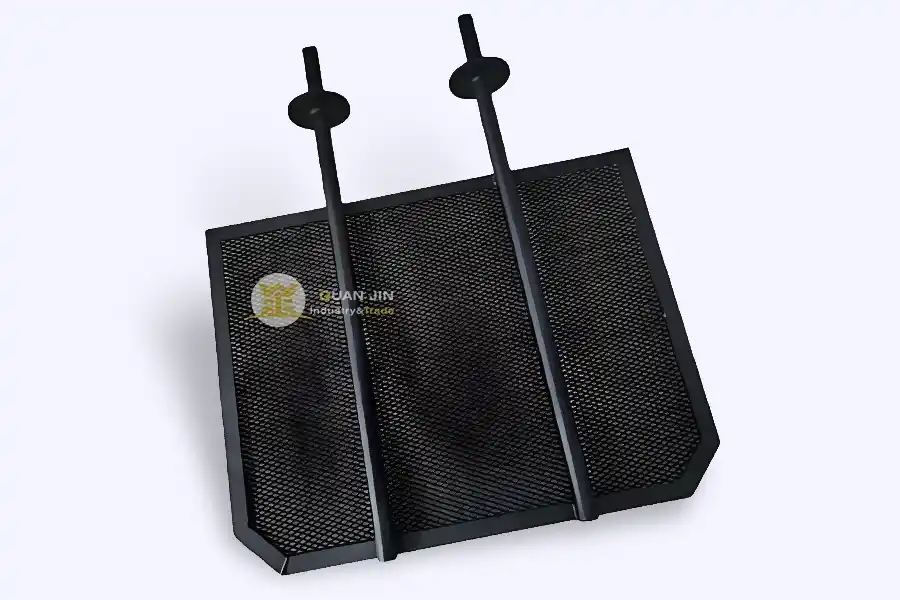
An electrolytic descaling cell is usually sold as a box with two plates inside. Those plates decide whether it works. One side has to make chlorine or oxygen without dissolving. The other has to collect hardness without passivating. This guide covers both.
2–5 yr
Typical electrode design life
10–15 g/m²
MMO coating load
10–50 mA/cm²
Working current density
≤60 °C
Continuous water temperature
Most electrolytic descaling units are sold on the cathode. That is fair. The cathode is where the scale ends up, and a plate you can pull out and scrape makes a convincing demonstration. But when a unit underperforms six months after startup, the complaint usually lands on the electrode: the coating is gone, the cell voltage has climbed, or the chlorine residual has faded to nothing.
Both electrodes matter, and they fail for different reasons. This guide covers what each side does in a circulating water loop, how to choose the materials and coating, how to size the pair, and how these electrodes fail when the specification was written from a catalog instead of a water analysis.
The electrode pair
An electrolytic descaling cell has two electrodes in the same water, and they are doing opposite chemistry. The positive electrode oxidizes. The cathode reduces. Everything downstream, from the scale you scrape off to the chlorine you smell at the sample tap, comes from that split.
The positive electrode is the part that has to survive. It sits at a positive potential in a chloride-bearing electrolyte, generating chlorine, oxygen, and acid at its surface. Titanium is used because it passivates into a stable oxide instead of dissolving; the mixed metal oxide coating on top is what makes that passive surface catalytically useful. When people say titanium electrode in this industry, they usually mean the coated positive electrode.
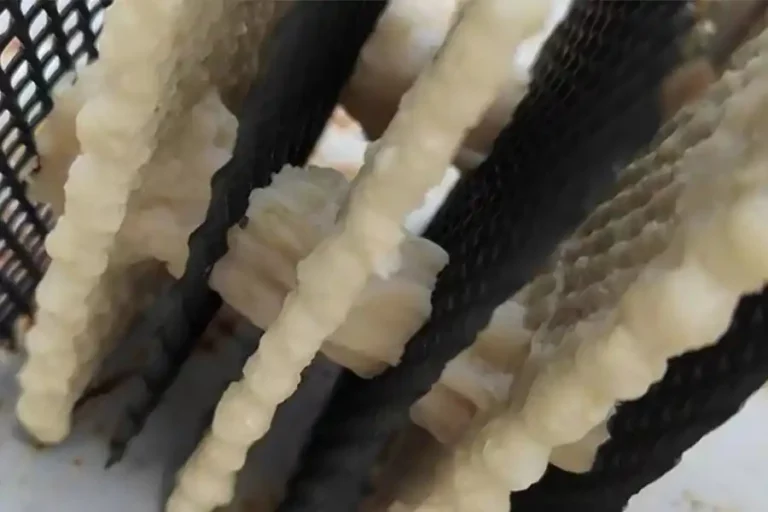
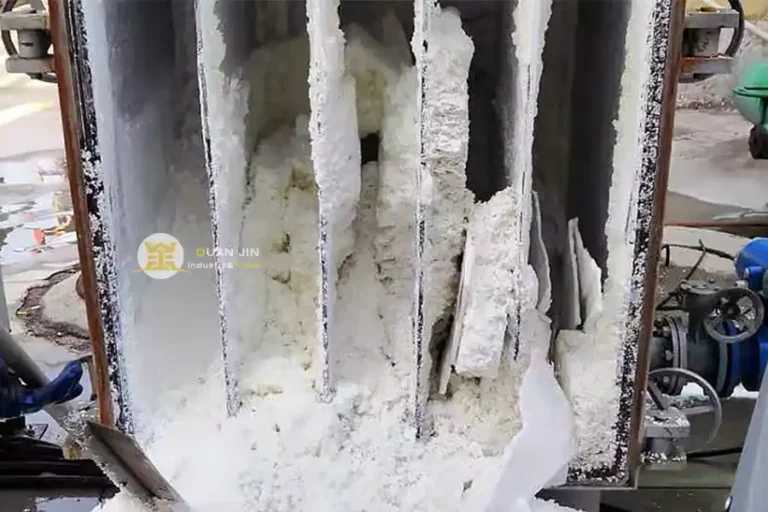
The cathode is the electrode that has to release. It runs at a negative potential, drives hydroxide formation, and collects calcium carbonate as a soft, friable layer. Its material decides how that layer adheres, how easily it scrapes off, and whether the plate itself corrodes when the current is interrupted. Stainless steel and titanium both work; they behave differently at the scrape.
A cell specified only by electrode area is a cell specified by half its problem. The cathode area, the gap, and the surface finish set the current distribution that the electrode has to live with.
- DSA
- Industry shorthand for a coated titanium electrode that keeps its shape instead of dissolving.
- MMO
- Mixed metal oxide. The iridium, ruthenium, and tantalum oxide layer that carries the oxidation reaction.
- CER / OER
- Chlorine evolution and oxygen evolution. The two oxidation reactions that compete, decided mostly by chloride.
- LSI
- Langelier Saturation Index. pH minus pHs; positive means the water wants to deposit calcium carbonate.
Why scale lands on the cathode
Calcium carbonate is less soluble in hot water than in cold. That one property explains why scale appears on the tube wall, the hottest surface in the loop, rather than in the basin where the water is cooler. Heat transfer surfaces also see the fastest flow and the thinnest boundary layer, so dissolved hardness is delivered right to the surface that cannot afford fouling.
A cooling tower makes it worse by concentrating the makeup water. At three cycles of concentration, hardness, alkalinity, chloride, and silica are roughly three times their makeup values. The Langelier Saturation Index turns that into one number: LSI = pH − pHs. Positive means the water wants to deposit calcium carbonate. Negative means it wants to dissolve it. Operators usually hold the loop slightly positive to protect mild steel, which is exactly the condition that fouls tubes.
Inside the cell, the cathode does locally what a hot tube wall does slowly. Water reduction and dissolved oxygen reduction both produce hydroxide at the surface:
2H2O + 2e− → H2↑ + 2OH−
O2 + 2H2O + 4e− → 4OH−
Local pH climbs into the 10 to 12 range inside a thin boundary layer, a mechanism described in recent reviews of electrochemical descaling (Water, 2024). Bicarbonate converts to carbonate, the water at the plate becomes supersaturated, and nucleation happens on the plate because that is where the supersaturation is highest. The crystals tend to be aragonite and vaterite, which scrape off as a soft slurry, rather than the dense calcite that cements itself to a tube wall.
Scale is also a poor conductor. Calcium carbonate runs about 2.5 W/m·K, roughly one-twentieth of carbon steel. A one-millimeter layer adds 0.0004 m²·K/W of fouling resistance. On a clean overall U-value of 1,500 W/m²·K, that drops the coefficient to about 940, a 38% loss before anyone notices the approach temperature drifting.
Swipe to see 1.5 and 2.0 mm.
Scale does one more thing that rarely shows up in a heat balance: it gives bacteria somewhere to live. The deposit shelters biofilm from biocide, and the biofilm makes the next layer of scale stick faster. That feedback loop is why a descaling cell that also produces a disinfectant tends to outperform one that only addresses hardness.
What the electrode contributes
The electrode never touches the scale it removes. It does three jobs, and all three show up in the operating cost.
It sets the chemistry
At the positive electrode, the reaction depends on what is dissolved in the water:
2Cl− → Cl2↑ + 2e−
then Cl2 + H2O → HOCl + H+ + Cl−
2H2O → O2↑ + 4H+ + 4e−
In most towers the first pathway does the useful work. Hypochlorous acid is a fast biocide, and biofilm is the glue that anchors scale. Kill the biofilm and the scale layer loses its grip. In low-chloride water the electrode evolves oxygen instead and oxidizes organics directly, which is a weaker disinfecting duty but still useful in a fouled loop.
Either pathway produces acid at the electrode surface. That is a materials fact, not a side note: the cell body, the gap geometry, and the way electrode effluent mixes back into the loop all have to tolerate a locally low pH. A cell that is hydraulically short-circuited, where flow bypasses the gap, runs hotter and wears faster because the acid and the gas never leave the surface.
It spreads current across the reactor
The electrode is not a collector. It is the source for the whole cell. Current leaves the coating, crosses the gap, and lands on the cathode. Where the gap is tight, current crowds; where the mesh is shadowed, current starves. That is why a flat plate facing a distant cathode wears at the edges first, and why mesh usually beats a solid sheet in a sidestream reactor: more of the surface sees moving water and a consistent gap.
It keeps the voltage down
Titanium on its own is a poor electrode. It passivates immediately, forming a TiO2 film that is stable and electrically insulating. The cell voltage climbs until the rectifier runs out of headroom. The mixed metal oxide coating gives the chlorine or oxygen reaction somewhere to happen at a lower potential. Coating loading is the practical knob: more grams per square meter means more active sites and a longer life at the same current.
A dimensionally stable electrode keeps the gap constant. The electrode does not dissolve into the water, the voltage does not drift upward because the positive electrode is thinning, and the coating is consumed slowly instead of the substrate. That is the difference between MMO titanium and graphite or lead: you design the reactor once, around a known geometry.
Coating consumption tracks charge passed, not calendar time. A cell that runs at half current for twice as long does not wear the same way.
Materials and geometry
Electrode specification is two decisions that are often collapsed into one: what the current passes through, and what shape it takes. Both affect performance, and both affect how the cell is maintained.
Electrode substrate and coating
Commercial descaling electrodes use ASTM B265 Grade 1 or Grade 2 titanium. Grade 1 is softer and easier to form into mesh and tube; Grade 2 is stronger and more common in plate. Grade 5 (Ti-6Al-4V) is a structural alloy, not an electrode material: the aluminum and vanadium are not helpful in an electrochemical duty, and the alloy is harder to coat uniformly.
The coating is a mixed metal oxide, usually ruthenium-iridium for chlorine evolution or iridium-tantalum for oxygen evolution. Loading runs from about 8 to 15 g/m² for cooling water, with the higher end used where the water is aggressive or the design life is long. The coating is a wear item; the titanium underneath is not.
Cathode material
The cathode is where scale has to release. Three materials show up in commercial units:
| Material | Behavior | Where it fits | Watch out for |
|---|---|---|---|
| 316L stainless | Good corrosion resistance in cooling water; scale releases as a sheet when scraped | Most packaged descaling units; the default choice | Pitting in high-chloride water if the current is interrupted and the surface sits wet |
| Grade 2 titanium | Immune to chloride pitting; lighter; scale adhesion similar to stainless | Brackish makeup, high cycles of concentration, marine sites | Higher cost; lower thermal and electrical conductivity than steel |
| Carbon steel | Cheap and conductive, but needs a corrosion allowance | Large, low-cost cells where the plate is replaced rather than cleaned | Rust under the scale layer; iron release into the loop |

Geometry
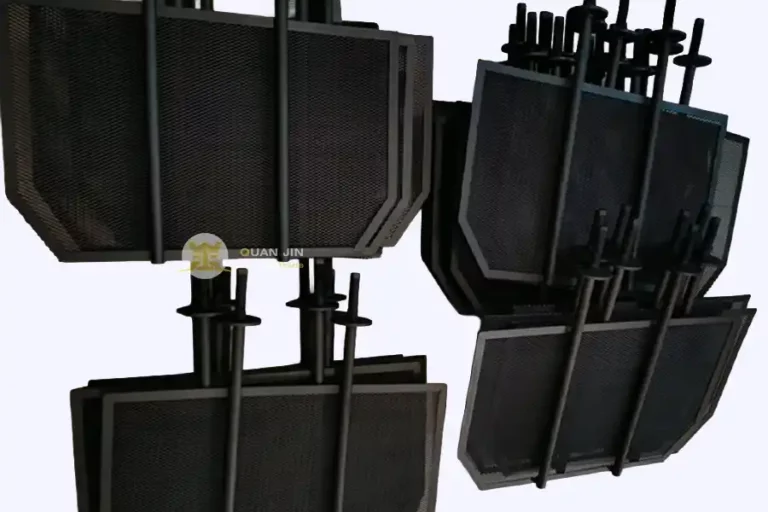
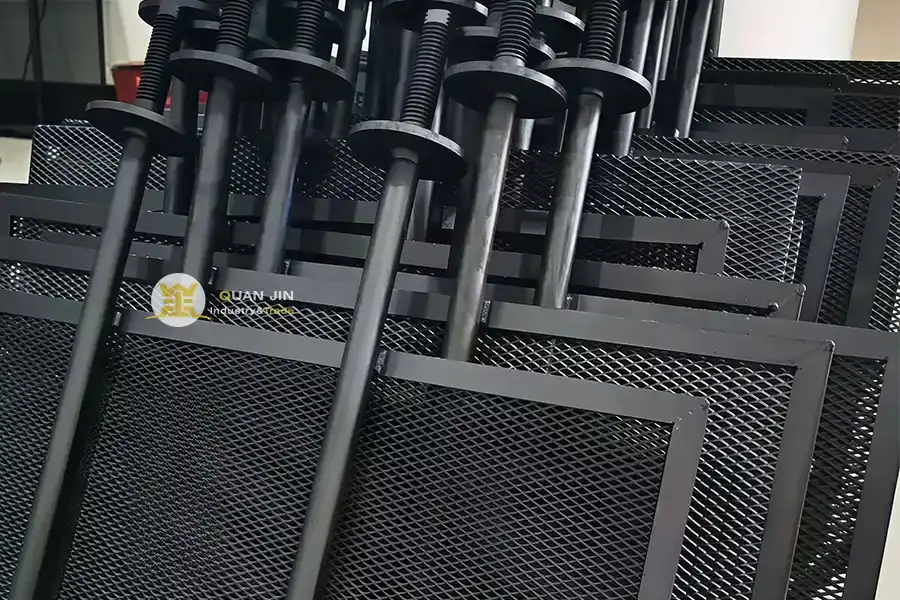
The electrode shape follows the reactor, not the other way around. Four formats cover most cooling water work:
| Format | Strength | Weakness | Typical use |
|---|---|---|---|
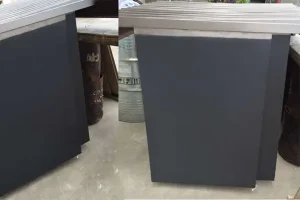
| Plate | Uniform field, easy to model, simple to replace | Edge current crowding if the gap is not controlled | Rectangular reactors, larger cells |
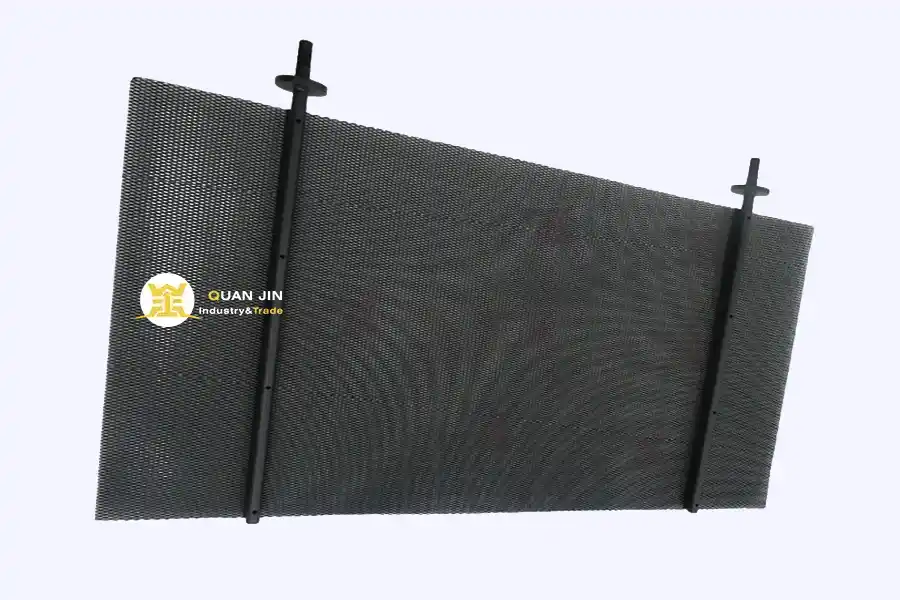
| Mesh | High surface area, good flow access, tolerant of fouling | Harder to weld; edges need attention | Sidestream reactors, tight footprints |
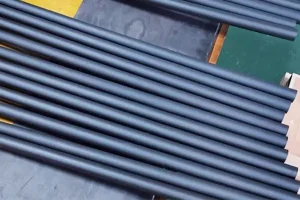
| Tube | Fits inside a pipe; good for pressurized loops | Inner surface inspection is awkward | Inline and compact skid designs |
| Rod | Simple, robust, easy to seal | Low surface area per unit length | Small cells, pilot units, research rigs |
Geometry is usually set by the reactor envelope and the flow path. If you are still choosing, start with the reactor drawing and the target current, then pick the format that fits the gap.
Two geometry rules survive most designs. Keep the electrode-to-cathode gap consistent across the active area, because current takes the shortest path and a tilted plate wears unevenly. And keep the electrode fully immersed at the lowest operating level, because a dry top edge corrodes in a chlorine atmosphere.
For the standard build ranges behind these numbers, see the circulating water descaling electrode page. Plate, mesh, tube, and rod formats each have their own page if you already know the shape you need.
Coating selection: chloride first
Chloride decides which reaction the electrode spends most of its current on. In high-chloride water, chlorine evolution is favored and a ruthenium-iridium coating does it efficiently. In low-chloride water, oxygen evolution dominates and an iridium-tantalum coating is more stable under that duty. There is no universal coating, and a quote that does not ask for chloride is a quote built on an assumption.
Coating selector
High chloride favors chlorine evolution. Size the coating load for the peak chloride, not the average.
This selector is a rule of thumb, not a specification. Fluoride, ammonia, silica, temperature, current density, and the reactor’s hydraulic design can move the answer. Send a water analysis before you commit to a coating.
| Water condition | Coating | Dominant reaction | What it buys you | Watch out for |
|---|---|---|---|---|
| Chloride above roughly 100 mg/L; most towers on municipal or brackish makeup | Ru-Ir MMO | Chlorine evolution (CER) | Strong hypochlorite output, biofilm control, lower cell voltage | Coating loss accelerates if the loop spends long periods in oxygen-evolving duty |
| Chloride below roughly 100 mg/L; soft makeup water | Ir-Ta MMO | Oxygen evolution (OER) | Stable under low-chloride, high-oxygen duty; good acid tolerance | Little chlorine output; do not expect it to carry disinfection alone |
| Chloride swings between the two regimes | Tuned hybrid loading | Mixed | One electrode that survives both seasons | “Hybrid” is a formulation, not a catalog item; it needs real water data |
| Free fluoride present, acidic water | No MMO coating | — | — | Fluoride attacks the titanium substrate itself; pretreat or change material |
The 100 mg/L line is a starting point, not a standard. A loop that runs at 80 mg/L most of the year but touches 250 mg/L in August should be specified for the peak, because coating wear is cumulative and the excursion is what sets the maintenance interval. This is the single most common specification error we see: an electrode sized and coated for the annual average chemistry.
Two other numbers are worth pulling from the water analysis before the coating is fixed. Free fluoride above about 1 to 2 mg/L in acidic water is a substrate problem, not a coating problem. Ammonia consumes chlorine as fast as the electrode makes it, so a high-ammonia loop will look like a failed electrode when it is really a chlorine demand problem.
Sizing the cell
Start with the current the reactor needs, then work backward to area. The relationship is simple:
A = I / J, where A is active electrode area in square meters, I is total current in amps, and J is current density in A/m². One mA/cm² equals 10 A/m².
A 300 A cell running at 20 mA/cm² needs 300 / 200 = 1.5 m² of active electrode surface. The same current at 50 mA/cm² needs 0.6 m², and at 10 mA/cm² needs 3.0 m².
Swipe to see 30 and 50 mA/cm².
Running at the top of the range saves metal and plant space. It also shortens coating life, because coating consumption tracks charge passed and the local current density at the edges is higher than the average on the drawing. Running at the bottom of the range gives a gentler duty but a reactor that is harder to fit into an existing plant room. Most cooling water units land between 20 and 30 mA/cm².
Cell voltage is the other half of the power bill. It is the sum of electrode overpotential, cathode overpotential, electrolyte resistance, and bubble resistance. In cooling water, electrolyte resistance usually dominates, and it scales with the gap: double the electrode-to-cathode distance and you roughly double that term. A 300 A cell at 4.5 V draws 1.35 kW. The same cell at 6 V draws 1.8 kW for the same chemistry, which is the kind of difference that shows up in a yearly energy review.
| Parameter | Typical value | Why it matters |
|---|---|---|
| Electrode substrate | ASTM B265 Grade 1 or 2 titanium | Ductile, weldable, and a good current distributor |
| Electrode coating | Ru-Ir or Ir-Ta MMO | Sets whether the electrode favors chlorine or oxygen evolution |
| Coating loading | 10–15 g/m² | More loading means more active sites and longer life at the same current |
| Current density | 10–50 mA/cm² | Below 10 you pay for metal; above 50 coating wear climbs |
| Cathode | 316L stainless or Grade 2 titanium | Decides how the scale layer releases and whether the plate pits |
| Temperature | Up to 60 °C continuous | Above that, coating wear and titanium passivation both accelerate |
| Design life | 2–5 years | Confirm against your water analysis and duty cycle, not the catalog |
Power supply and control
The rectifier is not an accessory. It sets the current the electrodes actually see, and its control mode decides what the operator can observe when something starts to go wrong.
Constant current, not constant voltage
Run the cell in constant-current mode and let voltage float. A rising voltage at fixed current is the clearest early signal that the coating is passivating, the surface is fouled, or the gap has changed. In constant-voltage mode, the current quietly falls as the electrodes age, the chlorine output drops, and nobody notices until the biofilm is back.
Voltage headroom
Size the rectifier for the end-of-life voltage, not the day-one voltage. A coated electrode’s voltage climbs as the coating is consumed and the substrate begins to passivate; a supply with no headroom will hit its ceiling in year three and start under-delivering current. Ten to twenty percent voltage headroom is cheap insurance.
Polarity reversal
Some self-cleaning reactors swap polarity on a timer to shed the cathode scale layer automatically. That works only if the coating was formulated for it. A standard Ru-Ir coating can lose activity quickly under repeated reversal, and the cathode becomes the positive electrode with a different corrosion problem. Tell the manufacturer the control scheme before the coating is chosen.
Disinfectant control
If the cell is also the biocide source, control it on a residual, not on the rectifier nameplate. An ORP probe or a chlorine analyzer in the return line closes the loop; a fixed current setpoint does not, because chlorine demand moves with load, temperature, and ammonia. At 100% current efficiency, one amp-hour liberates about 1.32 g of Cl2; in cooling water a large share of the current goes to oxygen instead, so the nameplate is a ceiling, not a dose.
Interlocks worth having
What actually kills electrodes in cooling water
An electrode that fails in a cooling loop rarely fails because the titanium was bad. It fails because something in the water or the installation changed. These are the six we see most often.
- Chloride excursion. A tower concentrates whatever is in the makeup water. An electrode coated for a soft-water summer can spend August in brackish conditions, and the coating loss that follows is not linear. Specify for peak chloride and peak temperature, then confirm with the water utility whether the makeup source can change.
- Free fluoride. Fluoride attacks the titanium substrate, not just the coating. Once the passive film breaks down, the electrode pits and the coating has nothing to hold on to. If fluoride is present, find out at what concentration and at what pH before you quote an MMO electrode.
- Oil, glycol, and biofilm on the mesh. A coated surface covered in oil is electrically insulated from the water. Cell voltage climbs, current distribution goes uneven, and the operator turns up the rectifier, which makes the uncovered areas wear faster. Fix the source of the fouling before replacing the electrode.
- Dry-out and gas blanketing. A cell that drains at shutdown, or a pocket at the top of the electrode that never wets, corrodes in a chlorine atmosphere. Keep the cell flooded, vent the gas, and make sure the electrode is fully immersed at the lowest operating level.
- Reverse polarity without the right coating. Timed reversal is a legitimate maintenance strategy, but only for a coating built for it. On a standard coating it consumes activity in months instead of years, and the failure looks like a bad batch.
- Current crowding at the busbar. The busbar and the connection tab are part of the current path. A thin tab, a dry bolted joint, or a weld with porosity will heat up and eventually fail. Voltage drop at the connection looks like coating passivation on the rectifier, so check the joints before condemning the electrode.
The diagnostic sequence is almost always the same: measure cell voltage against the commissioning baseline, check the connections, inspect the electrode for coating loss and fouling, then look at the water analysis. Replacing the electrode first is the expensive way to learn that the chloride doubled.
For photographs and a longer list of coating failure patterns, see titanium electrode coating failure and maintenance.
Electrolytic descaling against inhibitor and softener
No treatment wins on every site. The useful comparison is not which technology is best, but which constraint dominates your plant: discharge limits, salt cost, space, labor, or the cost of a fouled exchanger.
| Factor | Scale inhibitor | Softener | Electrolytic descaling |
|---|---|---|---|
| Capital cost | Low | Medium | Medium to high |
| Operating cost | Chemical dose plus blowdown | Salt, resin replacement, regeneration water | Power plus periodic cathode scraping |
| Adds to the water | Yes, phosphonates or polymers | Yes, sodium | No reagent; chlorine or oxygen species only |
| Removes hardness | No, it suspends it | Yes, by ion exchange | Yes, as a solid on the cathode plate |
| Biofilm control | Needs a separate biocide | None | Chlorine or oxygen species in the same pass |
| Best fit | Small loops with tight capital budgets | Low-hardness makeup and space for regeneration | High cycles of concentration, discharge limits, biofilm problems |
| Limits | Blowdown and phosphorus limits | Salt discharge, resin fouling by chlorine | Sidestream only; silica and fluoride are difficult |
Two honest limits. First, an electrolytic cell treats a sidestream, not the whole loop, so the percentage of flow you put through it sets how fast hardness comes down. Second, silica is a different problem from calcium carbonate. Silica scales on the cathode too, but it is harder to scrape and less responsive to the pH swing that makes calcium carbonate drop out. If silica is high, say so before the reactor is designed.
Commissioning and maintenance
- Take a full water analysis before startup, including chloride, fluoride, ammonia, silica, iron, hardness, alkalinity, conductivity, and pH.
- Verify the electrode-to-cathode gap and parallelism at several points, not just at the ends.
- Record actual current and cell voltage at the design flow, and compare them with the values on the datasheet.
- Confirm DC polarity and cable gauge; measure voltage drop from the rectifier to the cell terminals.
- Set the polarity-reversal schedule only if the coating was formulated for it.
- Log cell voltage weekly. A rising trend is the earliest signal of passivation or fouling.
- Inspect the cathode at the first scheduled scrape and adjust the interval to what actually deposits.
- Keep a spare electrode on the shelf. The coating is a wear item, and a two-week shutdown costs more than the spare.
| Interval | Check | What you are looking for |
|---|---|---|
| Daily | Current, cell voltage, flow, chlorine or ORP residual | Any step change against the commissioning baseline |
| Weekly | Voltage trend at fixed current | A slow climb means passivation or fouling; a jump means a connection or a coating breach |
| Monthly | Busbar and terminal temperature; rectifier cooling | Hot joints, loose lugs, dust on heat sinks |
| Quarterly | Cathode scrape and electrode visual; chloride and hardness | Scale thickness versus expectation; coating color and edge wear |
| Annually | Gaskets, seals, insulation, spare stock | Hardened rubber, creep, moisture in terminal boxes |
What to send for a quote
Electrode selection is only as good as the water data behind it. A drawing alone gets you a price; a drawing plus an analysis gets you an electrode that lasts. Send:
- Chloride, hardness, alkalinity, conductivity, pH, silica, fluoride, ammonia, and iron
- Operating temperature and the highest temperature the cell will see
- Design flow through the cell and the sidestream percentage
- Rectifier current and voltage, or the target current density
- Reactor drawing or a sketch with the gap and the available electrode envelope
- Cathode material and whether the control scheme reverses polarity
- Expected duty cycle: continuous, seasonal, or intermittent
Need a coating recommendation for your loop?
Send the water analysis and the reactor drawing. We reply with a coating, a loading, a life estimate, and a price, usually within 12 hours.
Frequently asked questions
What is a titanium electrode in electrolytic descaling?
It is a titanium substrate carrying a mixed metal oxide coating, and in a descaling cell it is the positive electrode that drives the chemistry. The negative electrode, or cathode, is often 316L stainless steel but can also be titanium. When you specify a cell, specify both; they fail for different reasons.
Which electrode wears out first, the positive or the negative?
The positive electrode. The cathode collects scale but does not normally consume itself, so it is cleaned rather than replaced. The positive electrode’s coating is consumed by the charge passed, and its life is set by current density, chloride, temperature, and coating loading. A cathode can still fail by pitting or mechanical damage, but coating wear is the predictable life limit in a descaling cell.
Does electrolytic descaling remove scale, or just prevent it?
It does both, in sequence. Hardness is removed from the loop as calcium carbonate that precipitates onto the cathode and is scraped off, and the scale that would have formed on heat transfer surfaces is prevented from forming there. The electrode’s chlorine or oxygen output also breaks down the biofilm that anchors scale to metal.
Should I use Ru-Ir or Ir-Ta for cooling tower water?
Start with chloride. Above roughly 100 mg/L, Ru-Ir is usually the right choice because it evolves chlorine efficiently and provides disinfection in the same pass. Below that, Ir-Ta is more stable because oxygen evolution dominates. If chloride swings with the season or the makeup source, specify a hybrid loading against the worst case.
How long does a titanium electrode last in circulating water?
At 10 to 50 mA/cm² with 10 to 15 g/m² of coating, most cooling water electrodes are engineered for three to five years. Actual life depends on chloride, fluoride, temperature, current density, and how often the cell runs dry. A weekly cell-voltage log tells you more about remaining life than the calendar.
Can electrolytic descaling replace scale inhibitor completely?
Sometimes, but not by default. A sidestream cell removes hardness and controls biofilm, so inhibitor and biocide doses usually drop. Whether you can stop them depends on cycles of concentration, makeup quality, metallurgy, and how much of the loop you treat. Most plants keep a small chemical backup for excursions.
What current density should the electrode run at?
For cooling water, 10 to 50 mA/cm² is the working range. Lower current density means more electrode area and a bigger reactor. Higher current density means less titanium but faster coating wear and more edge current. Size for the middle of the range, then verify actual current distribution after commissioning.
Why is my cell voltage climbing?
A slow rise usually means the coating is passivating, the surface is fouled with oil or biofilm, or the gap has changed. A fast jump usually means a coating breach, a bad connection, or gas blanketing. Compare against a baseline taken at commissioning; a voltage reading without a baseline tells you very little.
Can you build electrodes to our reactor drawing?
Yes. We build plate, mesh, tube, and rod electrodes to customer drawings, including welded assemblies, current distributors, and cabling. Send the drawing plus a water analysis and we will reply with a coating recommendation, loading, life estimate, and price, usually within 12 hours.