

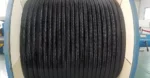


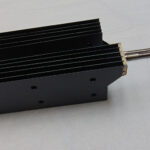
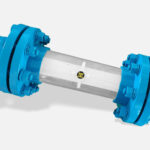
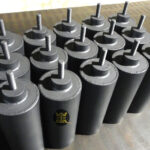
A coated titanium anode is an insoluble electrode made by applying a thin catalytic coating to a titanium substrate. The titanium base, usually Grade 1 or Grade 2 per ASTM B265, carries the current and resists corrosion. The coating does the electrochemical work. Depending on the coating, these anodes are also called MMO anodes, DSA anodes (dimensionally stable anodes), or platinized titanium anodes.
Key points at a glance
- Substrate: titanium Grade 1 or Grade 2 (ASTM B265)
- Coating options: RuO₂, IrO₂, Pt, PbO₂, and mixed metal oxides (MMO)
- Available forms: plate, mesh, tube, rod, wire, and basket
- Main uses: chlor-alkali, water treatment, electroplating, and cathodic protection
- Made in Baoji, China; custom sizes and coating formulas on request
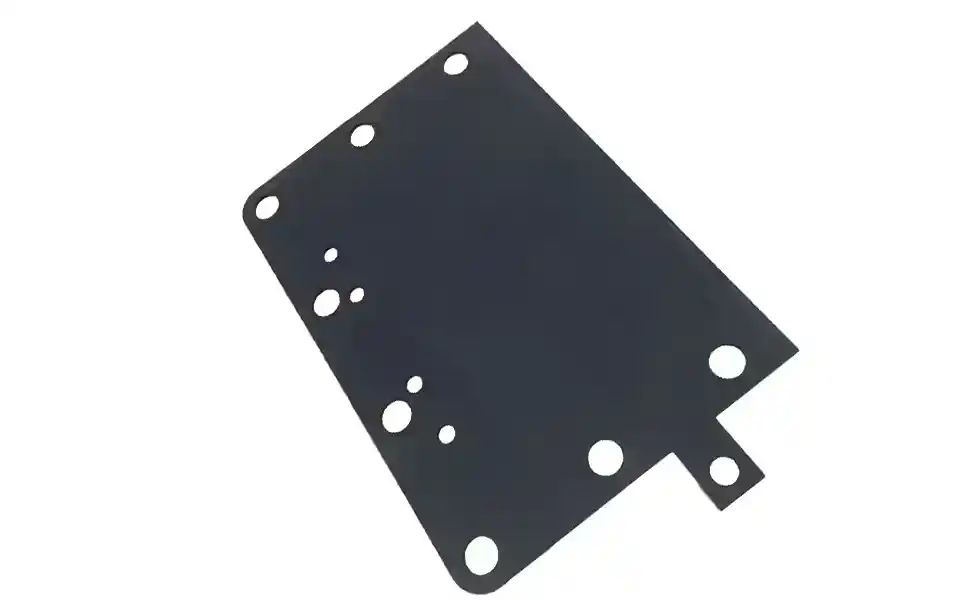
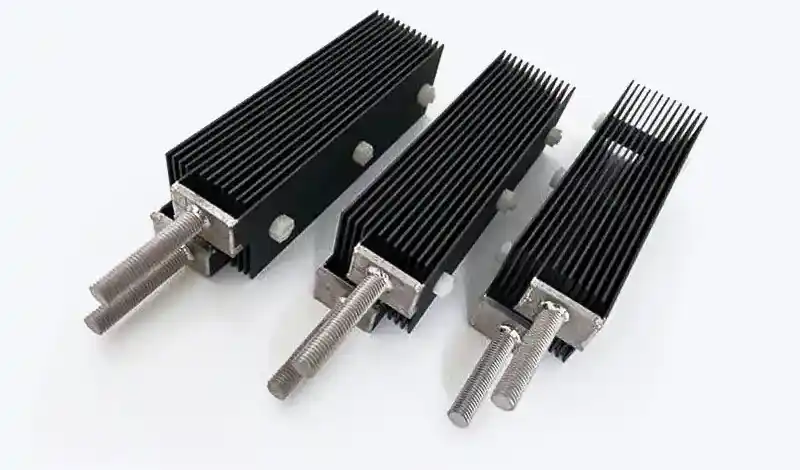
How a Coated Titanium Anode Is Built
A coated titanium anode has two parts: a titanium substrate and a catalytic coating. Bare titanium cannot work as an anode on its own, because it quickly forms a passive oxide film that stops the current. The coating solves this problem. It provides an active, conductive surface where the anodic reaction takes place, while the titanium underneath stays protected.
Mixed metal oxide coatings are applied by thermal decomposition. The substrate is cleaned and etched, brushed with a solution of metal salts such as ruthenium chloride and iridium chloride, and then baked in a furnace. The cycle is repeated until the coating reaches the required loading. Platinum coatings are usually electroplated in a thin layer, typically 1 to 5 μm. Lead dioxide coatings are electrodeposited from a lead nitrate bath.
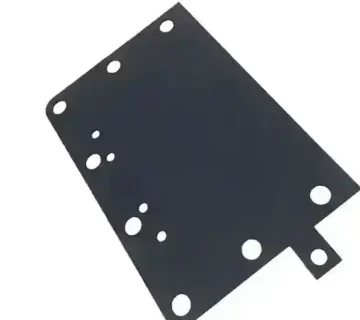
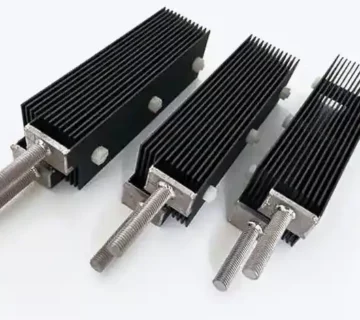
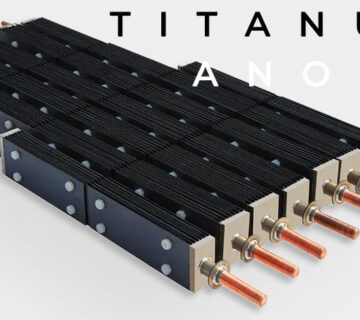
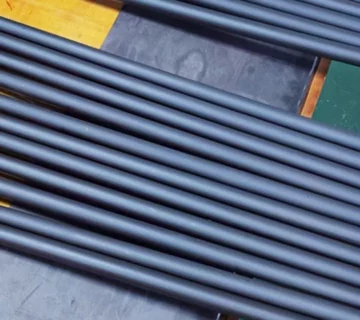
The substrate can be machined into many forms: plates for electrolytic cells, mesh for large surface area, tubes for cathodic protection, rods and wire for small cells, and baskets for electroplating. The coating formula and the substrate shape are chosen together, based on the electrolyte, current density, and cell design.
Common Coating Materials
The four standard coating families for titanium anodes are ruthenium oxide, iridium oxide, platinum, and lead dioxide. Most industrial anodes today use mixed metal oxide (MMO) coatings that combine two or more of these oxides.
| Coating | Full name | Typical duty |
|---|---|---|
| RuO₂ based | Ruthenium oxide, often mixed with IrO₂ | Chlorine evolution: brine electrolysis, seawater, sodium hypochlorite generation |
| IrO₂ based | Iridium oxide, often mixed with Ta₂O₅ | Oxygen evolution in acidic electrolytes: sulfuric acid, electrowinning, water electrolysis |
| Pt | Platinum, electroplated 1 to 5 μm | High catalytic efficiency for small cells and special duties where budget allows |
| PbO₂ | Lead dioxide, electrodeposited | High oxygen evolution potential: wastewater oxidation and electrowinning |
| MMO | Mixed metal oxide, for example Ru-Ir or Ir-Ta oxides | Balanced activity and stability; the most common industrial choice |
The choice of coating depends on the reaction you want at the anode. If the job is to make chlorine or hypochlorite, a RuO₂ based coating gives the lowest chlorine overpotential. If the job is oxygen evolution in an acidic bath, an IrO₂ or Ir-Ta coating lasts much longer. For a deeper look at the four families, see our classification of coated titanium anodes.
Advantages of Coated Titanium Anodes
Coated titanium anodes replaced graphite and lead alloy anodes in most electrochemical industries for practical reasons:
- They do not dissolve. The anode is insoluble, so the electrolyte stays clean and the electrode gap stays constant. Graphite and lead anodes wear away and contaminate the bath.
- Lower cell voltage. The catalytic coating lowers the chlorine or oxygen overpotential, so the cell runs at a lower voltage and uses less power per ton of product.
- Long service life. Under rated conditions, an MMO coating lasts years rather than months, which means fewer change outs and less downtime than with graphite or lead.
- Stable dimensions. The titanium substrate keeps its shape, so current distribution stays uniform over the whole service life. This is where the name DSA, dimensionally stable anode, comes from.
- Light weight. Titanium is far lighter than a lead anode of the same size, which simplifies handling and installation.
- Tailored coatings. The oxide mix and loading can be adjusted for a specific electrolyte and current density, instead of forcing one material to fit every duty.
How the Main Coating Types Compare
RuO₂ based coatings have the highest activity for chlorine evolution and are the standard choice for chlor-alkali cells and hypochlorite generators. Their weak point is oxygen: when the duty shifts to oxygen evolution, ruthenium wears faster and service life drops.
IrO₂ based coatings trade some activity for much better stability. In sulfuric acid and other acidic oxygen evolving baths, an Ir-Ta coating can outlast a Ru based coating several times over, which usually justifies the higher material cost.
Platinum has the highest catalytic activity of the three, but the metal price limits it to thin electroplated layers of 1 to 5 μm, mostly on small parts such as electrodes for water ionizers, sensors, and precious metal plating.
Mixing oxides is how the industry balances these trade offs. Ru-Ir coatings combine the chlorine activity of ruthenium with the stability of iridium. Ir-Ta coatings push stability further for oxygen duty. That is why most industrial titanium anodes sold today are MMO coatings rather than a single oxide. For the reaction mechanisms behind this, see our article on mixed metal oxide coated titanium anodes.
Typical Applications
Coated titanium anodes are used wherever an electrochemical process needs a stable, insoluble anode:
- Chlor-alkali and sodium hypochlorite: brine and seawater electrolysis with ruthenium iridium coated titanium anodes.
- Water and wastewater treatment: electrochemical oxidation of organic pollutants, ballast water treatment, and swimming pool disinfection.
- Electroplating and PCB production: horizontal copper plating lines, precious metal plating, and hard chromium plating with iridium based anodes.
- Cathodic protection: MMO anodes for impressed current systems on pipelines, storage tanks, and marine structures.
- Electrowinning of non ferrous metals: copper, zinc, nickel, and cobalt recovery from sulfate baths with iridium tantalum coated anodes.
- Water electrolysis: hydrogen production and ionized water equipment, often with platinized titanium electrodes.
Frequently Asked Questions
What is a coated titanium anode?
A coated titanium anode is an insoluble electrode made by applying a catalytic coating, such as RuO₂, IrO₂, platinum, or a mixed metal oxide, onto a titanium substrate. The titanium provides strength and corrosion resistance, and the coating provides the active surface where the anodic reaction takes place.
What is the difference between an MMO anode and a DSA anode?
The two terms describe the same family of anodes from different angles. MMO, mixed metal oxide, refers to the coating chemistry. DSA, dimensionally stable anode, refers to the fact that the anode does not dissolve or change shape in service. In practice, most suppliers use the terms interchangeably.
How do I choose between RuO₂ based and IrO₂ based coatings?
Start from the reaction at your anode. If the job is chlorine or hypochlorite generation from chloride solutions, choose a RuO₂ based coating. If the job is oxygen evolution in an acidic bath, such as sulfuric acid electrowinning or water electrolysis, choose an IrO₂ or Ir-Ta based coating. When in doubt, send your electrolyte composition, current density, and temperature to the supplier and ask for a coating recommendation.
Can a worn titanium anode be recoated?
Yes. When the coating wears out, the old coating can be stripped and the titanium substrate recoated, as long as the substrate itself is not damaged. Recoating costs less than a new anode and is common practice for large plates and mesh used in chlor-alkali and electrowinning plants.